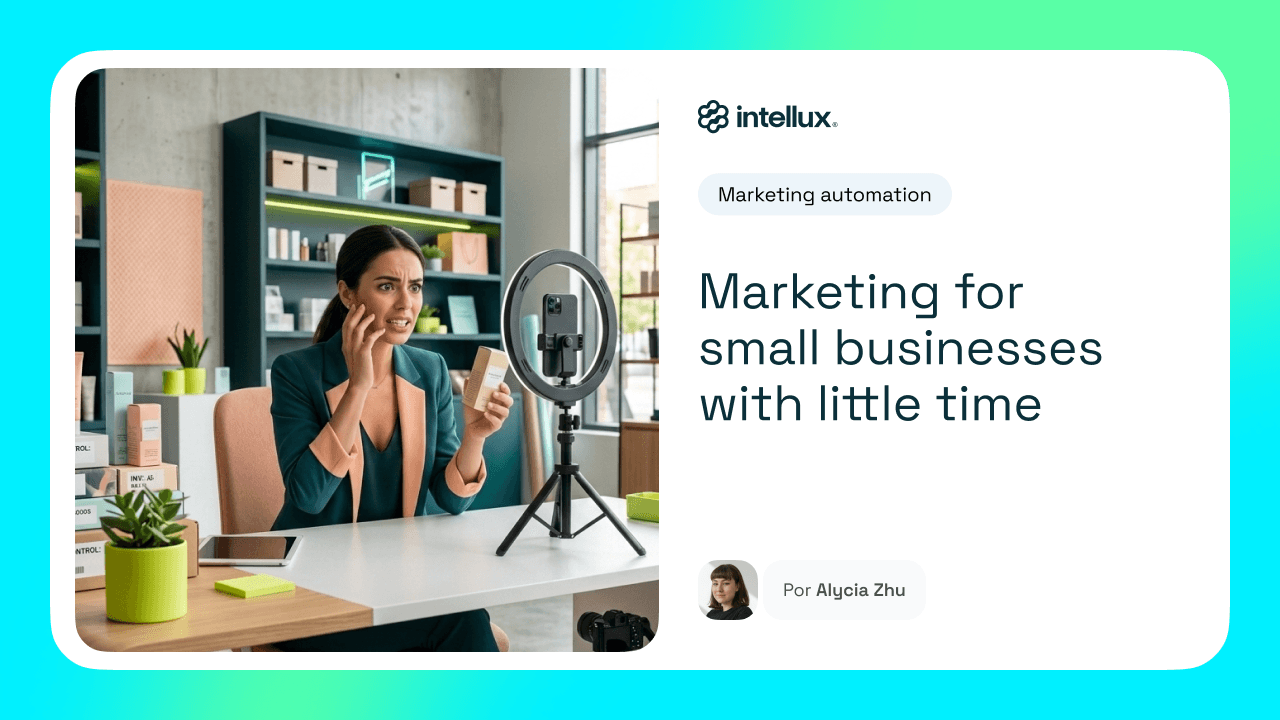
Managing social media by yourself may seem simple at first, but the routine usually becomes heavy when the brand needs to plan topics, write captions, adapt formats, review artwork, keep track of dates, and maintain posting frequency. The challenge is not only creating content, but creating content with strategy, consistency, and alignment with the brand identity.
With the advancement of artificial intelligence, this process has become more accessible for entrepreneurs, self-employed professionals, social media managers, and small businesses that do not have a complete marketing team. Today, AI can help organize ideas, create content pillars, suggest topics, build editorial calendars, and speed up steps that used to take many hours of work.
This movement makes sense because social media continues to have a major impact on people’s and brands’ routines. The Digital 2025 report points to 5.24 billion social media user identities worldwide and an average daily use of 2 hours and 21 minutes per internet user. This shows that being present on social media remains important, but it requires organization so content management does not become a tiring and improvised task.
Why use AI in social media management?
AI helps reduce the time spent on repetitive tasks, such as coming up with post ideas, organizing topics, structuring calendars, adapting approaches, and reviewing content. Instead of starting each post from scratch, the user can work from a strategic base created from the brand’s information, tone of voice, and communication goals.
Another important point is that AI does not need to replace human vision. The best use happens when it works as support to speed up planning, while the user continues reviewing, adjusting, and making decisions based on the knowledge they have about the business. This helps keep content faster, but still coherent with the brand.
This combination of human strategy and AI support already appears as a trend in marketing. HubSpot, for example, interviewed more than 1,100 social media professionals for its 2025 report and identified challenges such as keeping up with trends, measuring ROI, and creating engaging content. These are points where AI tools can help bring more structure to the work.
What can AI do in a social media routine?
Suggest post ideas based on the brand’s segment.
Create content pillars to organize communication.
Build editorial calendars with topics distributed by date.
Adapt content for Instagram, Facebook, LinkedIn, TikTok, and other networks.
Help create captions, hooks, and CTAs.
Reduce creative blocks during planning.
Support the review of tone of voice and message clarity.
Make posting consistency easier.
Centralize planning, creation, and scheduling, depending on the tool used.
Examples of tasks that stop being manual
Thinking of topics from scratch every week.
Building editorial calendar spreadsheets manually.
Separating content by objective without clear criteria.
Repeating the same subject across all social networks.
Forgetting important dates.
Posting only when an idea comes up.
Wasting time switching between multiple tools.
The biggest problem with managing social media by yourself
The biggest problem with managing social media by yourself is not a lack of ideas, it is a lack of process. Many brands even know what they want to communicate, but they cannot turn that into an organized content routine. The result is usually an irregular profile, with weeks of many posts and others with no updates at all.
When there is no process, content creation starts depending on inspiration. This causes delays, rush, repetition of topics, and difficulty measuring what actually works. In addition, the user ends up spending time on operational tasks that could be automated or, at least, accelerated with AI.
The Sprout Social report also reinforces the importance of a strategic presence on social media. The 2025 edition was based on surveys with more than 4,000 consumers and 1,200 marketing professionals, showing that social media remains a space for relationship-building, customer service, and building brand perception.
Signs that your social media management is disorganized
You decide the post on the same day it is published.
The brand goes many days without posting.
The content does not follow a communication line.
The captions seem disconnected from the positioning.
The posts always talk about the same subjects.
There is no editorial calendar.
You do not know which topics help generate authority, relationship, or sales.
The content does not change according to each social network.
Scheduling depends on several separate tools.
Consequences in practice
Less consistency.
More rework.
More time spent per post.
Less strategic clarity.
Difficulty maintaining frequency.
Less professional communication.
Loss of opportunities on dates and campaigns.
Lower use of the content created.
How does AI help create content faster?
AI speeds up content creation because it turns loose information into an organized structure. Instead of asking the user to think of everything alone, it can start from already defined data, such as segment, audience, tone of voice, goals, social networks, and posting frequency.
In practice, this reduces one of the most time-consuming steps in social media management: defining what to post. When the tool understands the brand, it can suggest topics that are closer to the positioning, create pillars, and organize the distribution of posts in a calendar.
In the case of Intellux, this process is connected to the Brand Manual. The tool uses information such as registered tone of voice, verbal characteristics, and brand personality preferences to support the creation of the editorial calendar, whether in the automated flow or in the manual flow.
How does AI speed up planning?
It analyzes brand information.
It identifies possible editorial lines.
It suggests content pillars.
It organizes topics by period.
It helps maintain coherence between posts.
It prevents the brand from depending on loose ideas.
It reduces the time between planning and execution.
It makes it easier to create content for more than one network.
What still needs human review?
Fine-tuning the tone of voice.
Checking specific information.
Approving sensitive topics.
Choosing images and artwork.
Validating commercial promises.
Adjusting the CTA.
Reviewing dates, campaigns, and offers.
Checking whether the content represents the brand well.
How to use AI to manage social media by yourself?
To use AI in social media management, the ideal approach is to start with strategy, not with the caption. Many people open an AI tool and ask it to “create a post,” but this usually generates generic content. The process works better when AI receives context about the brand, the audience, the goals, and the channels.
Intellux follows this logic by connecting the editorial calendar to the Brand Manual. Instead of generating disconnected content, the tool uses previously registered information to guide creation, respecting the brand identity and the desired type of communication.
This use of AI also helps people who work alone, because it centralizes steps that would normally be spread across documents, spreadsheets, scheduling apps, and internal conversations. The user can plan, review, upload artwork, and schedule posts in a single environment.
Step 1: organize the brand information
Define the brand name.
Describe the business segment.
Inform the target audience.
Register the tone of voice.
List communication preferences.
Include words, expressions, or approaches that should be avoided.
Explain the brand’s differentiators.
Define the main products or services.
Organize communication goals.
Information that helps AI work better
Who the audience is.
What the brand sells.
What problem it solves.
How the brand wants to be perceived.
Which social networks will be used.
What posting frequency makes sense.
Which topics should appear more strongly.
Which topics do not match the brand.
Step 2: define the content pillars
Create strategic categories for the posts.
Separate educational, institutional, commercial, and relationship-building content.
Avoid talking only about sales.
Include topics that help build authority.
Reserve space for social proof.
Include behind-the-scenes content when it makes sense.
Use the pillars to maintain variety in the calendar.
Review the pillars based on the brand’s goals.
Examples of useful pillars
Audience education.
Practical tips.
Brand behind-the-scenes.
Products or services.
Social proof.
Authority.
Commemorative dates.
Promotions.
Relationship-building.
Industry trends.
Step 3: choose the right social networks
Use Instagram for visual content, Reels, carousels, stories, and relationship-building.
Use Facebook for community, local information, promotions, and shareable content.
Use LinkedIn for authority, professional positioning, strategic behind-the-scenes, and market vision.
Use TikTok for fast, spontaneous, educational content with discovery potential.
Use YouTube for more complete content, tutorials, guides, and deeper videos.
Avoid publishing exactly the same content on all networks without adaptation.
What changes on each channel?
Instagram requires visual impact and quick clarity.
Facebook favors conversation and closeness with communities.
LinkedIn requires a more professional approach.
TikTok values rhythm, naturalness, and an attention-grabbing beginning.
YouTube allows deeper topics and helps build authority through search.
Step 4: create an editorial calendar
Define the calendar period.
Choose how many times per week the brand will post.
Distribute topics across the days.
Balance the content pillars.
Include important dates.
Plan campaigns in advance.
Reserve space for opportunity-based content.
Review whether the frequency is possible to maintain.
A good calendar should show
Post topic.
Publication date.
Social network.
Content objective.
Related pillar.
Production status.
Artwork or creative.
Caption.
CTA.
Scheduling.
How does Intellux help those who manage social media by themselves?
Intellux helps turn social media management into a clearer process because it brings together planning, AI, editorial calendar, and scheduling in the same platform. For those who work alone, this reduces the need to switch between multiple tools and decreases the time spent organizing content.
The platform allows users to create an editorial calendar through two paths: the automated flow and the manual flow. In the automated flow, AI takes on a larger part of creation and generates a plan based on the brand’s information. In the manual flow, the user controls more steps, but still receives intelligent support from the tool.
This model is useful because it respects different levels of maturity. Those who want speed can use the automated flow. Those who prefer to review each strategic decision can use the manual flow. In both cases, the goal is to help the brand create content with more consistency, less improvisation, and greater alignment with its identity.
What does Intellux centralize?
Brand Manual.
Tone of voice.
Personality preferences.
Creation of content pillars.
Editorial calendar.
Manual planning.
AI-powered automated planning.
Organization of topics by date.
Content review.
Artwork upload.
Post scheduling.
Benefits for those who work alone
Less time building a calendar from scratch.
More clarity about what to post.
More consistency in frequency.
More alignment with the brand identity.
Less dependence on spreadsheets.
Less creative block.
More control over posts.
More ease in reviewing and scheduling.
How does Intellux’s automated editorial calendar work?
Intellux’s automated editorial calendar is recommended for those who want to create a plan faster. In this flow, the user selects a brand already registered in the Brand Manual, enters a prompt with the desired type of content, and allows the AI to analyze the brand data to generate the calendar.
The AI considers the registered tone of voice, verbal characteristics, and brand personality preferences. From there, it creates content pillars and organizes the topics in a strategic calendar. By default, the automated flow generates 2 weeks of content, with 3 posts per week, considering Instagram, Facebook, and LinkedIn for scheduling directly through Intellux.
This flow is useful for those who need to quickly move from the idea stage to a structure ready for review. The user can still analyze the plan, adjust information, and move on to production and scheduling.
How does Intellux’s manual editorial calendar work?
Intellux’s manual editorial calendar is recommended for those who want to participate more actively in the decisions. In this flow, the user chooses the brand, selects the platforms, defines the posting frequency, chooses up to 3 main goals, reviews the content pillars, and determines the calendar validity period.
Even though it is manual, the process still uses AI. After the user defines the initial preferences, Intellux analyzes the brand, interprets the requests, and develops suggested content pillars. The user can edit the distribution of pillars, change names, adjust main and secondary topics, save the changes, and move on to creating the calendar.
This flow is useful when the brand already has a more defined strategy or when the user wants to better control the goals and topic distribution. It combines personalization with AI support, keeping the planning more strategic.
How to create content faster without losing quality?
Creating content faster does not mean publishing just anything. AI should help speed up the process, but quality depends on strategy, review, and clarity. For this reason, the ideal approach is to use technology to structure the base and use human judgment to adjust what needs context.
Quality also depends on understanding the behavior of each social network. The same topic can be turned into an Instagram Reel, an explanatory Facebook post, a professional reflection on LinkedIn, or a short video for TikTok. AI helps with adaptation, but strategy defines the intention.
Hootsuite points out in its 2025 trends report that social media teams that develop strategic AI capabilities, in addition to tactical uses, tend to gain efficiency and insights to improve marketing. This reinforces that AI should be used as part of the strategic process, not only as a generator of quick texts.
Best practices to maintain quality with AI
Provide context before requesting content.
Review all content before publishing.
Adjust the language to the brand tone.
Avoid generic posts.
Use real data when making claims.
Adapt each post to the channel.
Maintain visual and verbal coherence.
Use clear CTAs.
Analyze results after publication.
Update content pillars when necessary.
What to avoid when creating content with AI?
Copying and pasting AI responses without review.
Using the same text on all social networks.
Creating posts without an objective.
Publishing only commercial content.
Ignoring comments and messages.
Overusing trends that do not match the brand.
Letting AI invent information.
Losing the human tone of communication.
What types of content can you create with AI?
AI can support several content formats, from educational posts to promotional campaigns. The secret is to organize content by intention, because each publication should fulfill a function within the editorial calendar.
For those who manage social media by themselves, this organization helps avoid the feeling that everything needs to sell all the time. A strong brand also needs to educate, generate trust, show behind-the-scenes content, answer questions, and build relationships.
With Intellux, these topics can be organized into pillars inside the editorial calendar, allowing posts to be distributed in a more balanced way throughout the days.
Content that AI can help plan
Educational posts.
Quick tips.
Behind-the-scenes content.
Social proof.
Testimonials.
Product posts.
Service posts.
Institutional content.
Commemorative dates.
Promotional campaigns.
Authority content.
Answers to frequently asked questions.
Relationship-building content.
Post sequences.
Short video scripts.
Examples by objective
Brand awareness: behind-the-scenes, history, differentiators, and values.
Engagement: questions, polls, myths and truths, curiosities.
Authority: tips, analyses, explanations, and trends.
Sales: offers, benefits, demonstrations, and direct CTAs.
Relationship-building: testimonials, routine, team, and humanized content.
Education: tutorials, step-by-step guides, frequently asked questions, and quick guides.
How to measure whether AI is helping with social media management?
AI truly helps when it improves the routine and the results. That is why it is important to track both productivity metrics and performance metrics. It is not enough to create more posts, it is necessary to understand whether the content is more organized, more coherent, and more useful for the audience.
Some metrics show whether management has become more efficient, such as time spent planning, number of posts created, frequency maintained, and reduction in rework. Others show whether the content is performing better, such as reach, engagement, clicks, leads, and conversions.
This care matters because the use of AI in marketing continues to grow, but it needs to be accompanied by analysis and strategy. The State of Marketing AI 2025 report gathered data from almost 1,900 marketing and business leaders, showing that AI is already part of central discussions about productivity, impact, and the future of teams.
Metrics to track
Time spent planning the month.
Number of posts created per week.
Posting frequency maintained.
Reach.
Impressions.
Engagement.
Clicks.
Saves.
Shares.
Leads.
Conversions.
Growth of qualified followers.
Messages received.
Cost per result, when there is paid media.
Indicators of routine improvement
Less time to define topics.
Fewer publication delays.
Less creative block.
More clarity in content pillars.
More visual and verbal consistency.
Better organization by social network.
More ease in reviewing and scheduling.
More predictability in monthly management.
Is it worth using Intellux to manage social media by yourself?
Yes, it is worth it for those who want to reduce the time spent on planning and turn social media management into a more organized process. Intellux is useful because it connects Brand Manual, AI, editorial calendar, and scheduling, helping the user move away from improvisation and work with a more strategic routine.
For those who work alone, this type of tool helps solve a common pain point: having to think of everything, create everything, organize everything, and still publish on the right channels. With Intellux’s editorial calendar, the user can start from a clearer structure, review what the AI suggested, adjust what is necessary, and move forward to publication.
The tool also adapts to different work styles. Those who want speed can use the automated flow. Those who want control can use the manual flow. In both cases, AI acts as support to transform brand information into planned content.
Main advantages of Intellux
Creation of an editorial calendar with AI.
Use of the Brand Manual as a strategic base.
Automated flow to save time.
Manual flow for more control.
Generation of content pillars.
Organization of topics by date.
Planning for different social networks.
Possibility to review content.
Artwork upload.
Direct scheduling through the platform.
Reduction of rework.
More consistency in the social media routine.
Who does Intellux make sense for?
Entrepreneurs who manage their own brand.
Small businesses without a marketing team.
Social media managers who need to gain productivity.
Self-employed professionals who want to post more frequently.
Brands that need to organize content for several networks.
Professionals who want to use AI more strategically.
Companies that want to centralize planning and scheduling.
Conclusion
Using AI to manage social media by yourself is a way to save time, reduce improvisation, and create a more strategic content routine. Technology helps organize ideas, generate pillars, distribute topics, and speed up production, but the best results appear when it works together with human review and a well-defined brand identity.
Intellux enters this process as a practical solution for those who want to plan, create, and schedule content with more clarity. With the manual and automated editorial calendar, the platform allows the user to choose between more speed or more control, always using the brand information as a basis to generate a more coherent plan.
If your biggest difficulty is maintaining frequency, organizing ideas, and turning content into routine, AI may be the support that was missing. With a tool like Intellux, it becomes simpler to move away from last-minute posts and build a more consistent, strategic digital presence aligned with your business.
Try Intellux free for 7 days
Create your editorial calendar with AI.
Organize content by strategic pillars.
Plan posts for different social networks.
Review topics, captions, and materials.
Upload artwork and track your tickets.
Schedule publications in a single platform.
Free 7-day trial, for a limited time.
Start your free Intellux trial now and see how managing social media by yourself can be simpler, faster, and more strategic.