
SEO



O Google Search Console está entrando em uma nova fase. Com o avanço das respostas geradas por inteligência artificial na Busca, o Google anunciou novos relatórios dedicados para mostrar como os sites aparecem em recursos como AI Overviews, AI Mode e experiências generativas no Discover.
Para quem trabalha com SEO, marketing de conteúdo ou gestão de sites, essa atualização representa uma mudança importante na forma de analisar visibilidade orgânica. Até então, os dados relacionados à presença em experiências de IA ficavam misturados aos relatórios gerais de desempenho. Agora, a proposta é oferecer uma visão separada, permitindo entender melhor quando e onde as páginas aparecem dentro desses novos formatos de busca.
A principal novidade é a criação de relatórios específicos de desempenho para recursos de IA generativa no Search Console. Esses relatórios foram anunciados pelo Google em junho de 2026 e começaram a ser liberados para um grupo limitado de sites, como parte de uma fase de testes antes de uma expansão mais ampla.
Na prática, o Search Console passa a mostrar dados de visibilidade em experiências como AI Overviews e AI Mode, recursos em que o Google usa inteligência artificial para sintetizar respostas, apresentar links de apoio e ajudar o usuário a explorar temas com mais profundidade.
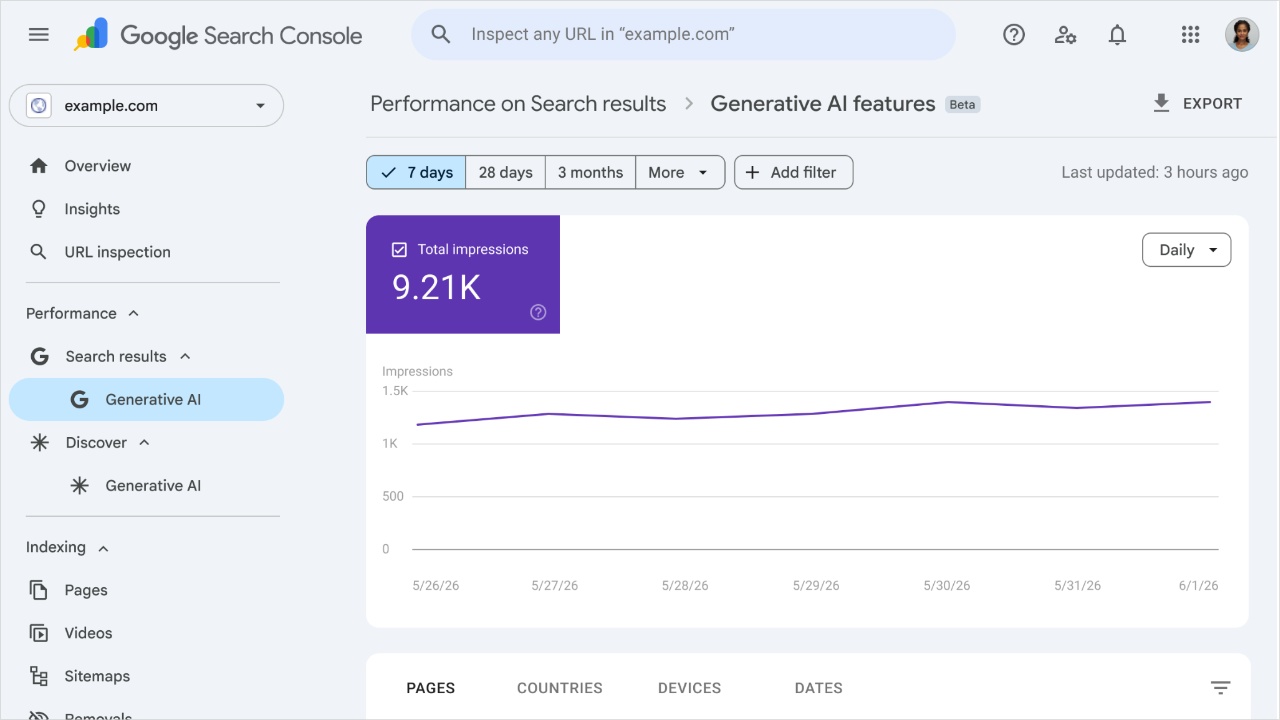
Imagem original: Google Search Central
Antes dessa atualização, as aparições em recursos de IA já podiam estar incluídas nos relatórios gerais de performance. O problema é que os profissionais de SEO não conseguiam separar com clareza o que vinha da busca tradicional e o que vinha das experiências com IA. Com os novos relatórios, essa distinção começa a ficar mais visível.Segundo o Google, os novos relatórios devem apresentar informações como:
Esses dados ajudam a responder uma pergunta que se tornou cada vez mais comum em estratégias de SEO: meu conteúdo está sendo usado ou exibido nas experiências de IA do Google?
Neste primeiro momento, os relatórios de IA generativa no Search Console estão sendo liberados para um grupo limitado de sites. Segundo o Google, a ideia é testar a funcionalidade, coletar feedback dos usuários e ajustar a ferramenta antes de disponibilizá-la de forma mais ampla.
Por isso, se o relatório ainda não aparecer na sua propriedade do Search Console nos próximos meses, isso não significa erro de configuração. A liberação deve acontecer de maneira gradual.
A chegada das métricas de IA ao Search Console mostra que o SEO está se adaptando a nova realidade de buscas diretamente em inteligências artificiais. A busca tradicional, baseada em links azuis, snippets e posições orgânicas, continua importante. Porém, as experiências com IA já influenciam a forma como os usuários descobrem, avaliam e acessam informações. E no marketing, já existe uma área de otimização para pesquisas geradas por IA, o chamado GEO:Generative Engine Optimization.
Com AI Overviews e AI Mode, o usuário pode receber uma resposta mais completa diretamente na página de resultados. Em alguns casos, isso pode reduzir a necessidade de clicar em vários links. Em outros, pode ampliar a descoberta de novas fontes, já que o Google pode exibir páginas que ajudam a fundamentar a resposta gerada pela IA.
Por isso, medir apenas cliques, CTR e posição média pode não ser suficiente para entender toda a presença de uma marca na busca. A visibilidade em IA passa a ser uma camada importante de análise.
Durante muitos anos, uma das principais metas do SEO foi conquistar boas posições nos resultados orgânicos. Essa lógica continua válida, mas agora existe uma nova camada: aparecer como fonte, referência ou link de apoio em respostas geradas por IA.
Isso não significa abandonar as práticas tradicionais de SEO. Pelo contrário, o próprio Google reforça que as boas práticas de SEO continuam sendo a base para aparecer em recursos como AI Overviews e AI Mode. Conteúdo útil, confiável, bem estruturado, rastreável e voltado para pessoas segue sendo o caminho mais seguro.
O comportamento dos usuários também ajuda a explicar essa mudança. Em 2020, a pesquisa com IA generativa ainda não fazia parte da rotina digital em escala massiva. Já em 2026, mais de 1 bilhão de pessoas usam ferramentas independentes de IA todos os meses, e o ChatGPT chegou a cerca de 900 milhões de usuários ativos semanais.
Ou seja, a forma de pesquisar está mudando rapidamente, e o SEO precisa acompanhar essa nova jornada de descoberta. A diferença é que agora os profissionais de dados de marketing e TI terão mais métricas para avaliar se esse trabalho também está gerando presença nas experiências generativas.
Os relatórios anunciados pelo Google abrangem a visibilidade em recursos generativos da Busca, como AI Overviews e AI Mode, além de experiências de IA no Discover.
O AI Overview é o recurso que gera um resumo com inteligência artificial no resultado da busca. Ele aparece quando o Google entende que uma resposta sintetizada pode ajudar o usuário a compreender melhor um assunto.
Essas respostas podem trazer links para páginas de apoio, permitindo que o usuário aprofunde a pesquisa. Para os sites, aparecer nesse contexto pode representar uma nova forma de visibilidade, mesmo quando o comportamento de clique muda.
O AI Mode funciona de forma mais conversacional. Ele permite que o usuário faça perguntas mais complexas, explore comparações, peça aprofundamentos e siga uma jornada de pesquisa com respostas geradas por IA.
Para o SEO, isso amplia a importância de conteúdos completos, claros e bem conectados a diferentes intenções de busca. Uma página pode ser relevante não só para uma palavra-chave isolada, mas para um conjunto maior de perguntas relacionadas ao tema.
O Discover também entra nessa discussão porque o Google vem testando e integrando recursos de IA em diferentes áreas de descoberta de conteúdo. Com isso, a visibilidade fora da busca tradicional também pode ganhar novos indicadores dentro do Search Console.
Apesar do avanço, os relatórios de IA ainda têm limitações importantes. A principal delas é a ausência de dados de cliques e consultas no momento inicial da novidade.
Isso significa que será possível entender se uma página apareceu em recursos de IA, em quais países, dispositivos e períodos, mas ainda não será possível medir com precisão quantas visitas essa aparição gerou ou quais pesquisas acionaram a exibição.
Essa limitação exige cuidado na interpretação dos dados. Uma página com muitas impressões em IA pode estar ganhando autoridade e visibilidade, mas isso não garante, por si só, aumento de tráfego, leads ou conversões.
No SEO tradicional, impressões, cliques, CTR e posição média ajudam a montar um diagnóstico mais completo. Nos relatórios de IA, a leitura inicial será mais focada em presença e exposição.
Por isso, a análise deve combinar os novos dados com outras ferramentas, como Google Analytics, relatórios de conversão, comportamento dos usuários no site e acompanhamento das páginas que já performam bem na busca orgânica.
A atualização reforça uma tendência clara: conteúdos genéricos, rasos e repetitivos tendem a perder força em um ambiente onde a IA consegue sintetizar informações comuns rapidamente.

Para ganhar espaço, as marcas precisam produzir conteúdos com profundidade, experiência real, clareza e valor próprio. Isso inclui exemplos, análises, comparativos, dados, opiniões técnicas, estudos de caso, imagens úteis, vídeos e respostas completas para dúvidas do público.
O Google afirma que não existe uma otimização separada ou um “truque” específico para aparecer em AI Overviews ou AI Mode. A recomendação é seguir boas práticas de SEO, com foco em conteúdo útil, confiável e feito para pessoas.
Na prática, isso significa que as páginas precisam responder bem à intenção de busca, apresentar informações claras, ter boa estrutura de títulos, usar linguagem objetiva e oferecer algo que vá além de um resumo comum do assunto.
Em buscas com IA, a confiança da fonte se torna ainda mais relevante. Sites que demonstram experiência no tema, mantêm informações atualizadas e organizam bem seus conteúdos tendem a estar melhor posicionados para ganhar visibilidade.
Para empresas, isso pode significar fortalecer blogs institucionais, criar materiais educativos, publicar guias completos, trabalhar páginas de serviço com mais profundidade e mostrar conhecimento prático sobre o mercado em que atuam.
A novidade ainda está em fase de liberação gradual, então nem todos os sites verão os relatórios imediatamente no Search Console. Mesmo assim, é possível começar a se preparar desde já.
O primeiro passo é olhar para as páginas que já geram tráfego orgânico, leads ou conversões. Esses conteúdos devem estar atualizados, completos e bem estruturados.
Verifique se eles respondem às principais dúvidas do público, se possuem informações atuais e se oferecem uma visão útil sobre o tema. Páginas antigas, superficiais ou desatualizadas podem perder espaço em uma busca cada vez mais orientada por contexto e qualidade.
Para aparecer em recursos de IA da Busca, a página precisa ser rastreável, indexável e elegível para aparecer no Google Search. Isso torna a base técnica do SEO ainda mais importante.
Vale revisar pontos como robots.txt, indexação, sitemap, links internos, velocidade, experiência da página, dados estruturados coerentes com o conteúdo visível e disponibilidade do texto principal em HTML.
A IA consegue reunir informações comuns com facilidade. Por isso, conteúdos que apenas repetem o que já existe tendem a oferecer menos valor.
Inclua análises próprias, exemplos do mercado, dados internos quando possível, respostas detalhadas, orientações práticas e posicionamentos bem fundamentados. Esse tipo de conteúdo ajuda a diferenciar a marca e pode aumentar as chances de ser reconhecido como fonte útil.
Quando os relatórios estiverem disponíveis, acompanhe as páginas que aparecem em recursos de IA e compare esses dados com o desempenho orgânico tradicional.
Observe quais temas ganham mais impressões, quais páginas aparecem com frequência, quais países concentram a visibilidade e se existe relação com aumento de tráfego qualificado, tempo de permanência ou conversões.
A chegada dos relatórios de IA ao Search Console não significa o fim do SEO tradicional. Ela mostra que o SEO está evoluindo junto com a forma como as pessoas pesquisam.
Agora, além de buscar boas posições nos resultados orgânicos, as marcas também precisam entender como seus conteúdos aparecem em respostas geradas por IA, quais páginas são citadas ou exibidas e como essa presença influencia a jornada do usuário.
Ainda há limitações, principalmente pela ausência inicial de dados de cliques e consultas. Mesmo assim, a novidade representa um passo importante para tornar a busca com IA mais mensurável.
Para empresas que investem em conteúdo, o recado é claro: SEO continua sendo essencial, mas precisa ser analisado com uma visão mais ampla. A visibilidade orgânica agora também passa pela capacidade de ser útil, confiável e relevante em experiências de busca cada vez mais inteligentes.
O Search Console passará a oferecer uma leitura mais detalhada da presença dos sites nos recursos de inteligência artificial do Google. Essa mudança ajuda profissionais de SEO, gestores de marketing e empresas a entenderem melhor como seus conteúdos aparecem em AI Overviews, AI Mode e experiências generativas no Discover.
Para se preparar, o caminho não é buscar atalhos. O ideal é fortalecer a base técnica, atualizar conteúdos estratégicos, criar materiais mais completos e acompanhar os dados com atenção. Em um cenário de busca guiado por IA, quem produz conteúdo realmente útil tende a sair na frente.
Continue explorando conteúdos relacionados que podem ser do seu interesse