
Marketing tools


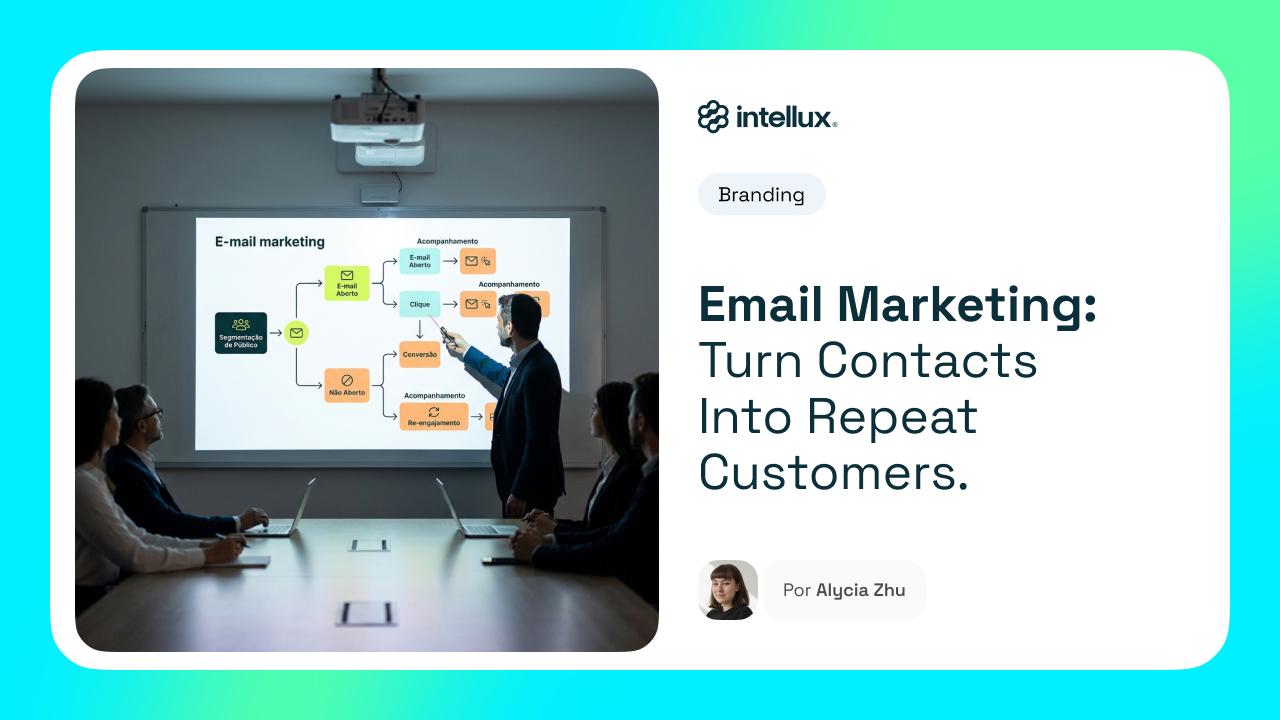
With so many social media platforms, advertisements, and new communication channels, it is natural to wonder whether email marketing still works. After all, is it worth investing in a channel that has existed for decades while consumer behavior continues to evolve?
The answer is yes, but results depend on how your business uses this tool. Email marketing often creates better opportunities when a previous relationship already exists, whether with customers who have made a purchase or people who have expressed interest in your products and services.
Therefore, before creating a campaign, it is important to understand the role of this channel in your business strategy. In this article, we will explain when email marketing makes sense and introduce three practical ways to use it to generate results.
Yes, email marketing remains relevant for businesses looking to build relationships, encourage repeat purchases, and stay connected with their audiences.
According to the State of Email 2026 report by Litmus, email programs with stronger financial returns prioritize relationship-building strategies, such as newsletters and welcome emails, rather than relying exclusively on promotional campaigns.
The report also highlights a shift in how companies evaluate performance. Businesses are looking beyond open rates and considering metrics related to revenue, retention, and customer value.
This demonstrates that email marketing success does not simply depend on the number of messages sent. What matters most is how relevant the communication is to its recipients.
However, to understand where this channel can deliver better results, we first need to explore two fundamental marketing concepts: inbound and outbound marketing.
Inbound and outbound marketing represent two approaches businesses use to attract customers.
Although both can generate sales, they differ significantly in how they establish initial contact with potential buyers.
Inbound marketing uses relevant content, experiences, and information to attract consumers who already have some interest in a particular topic, problem, or solution.
Imagine someone searching Google for advice on managing the finances of a small business. During their search, they find an educational article published by a financial management platform.
After reading the content, they decide to subscribe to receive additional materials by email. From that moment, the company can begin building a relationship with someone who has demonstrated interest in its industry.
In this scenario, the initial contact happened because of the consumer's own initiative.
According to HubSpot, a leading reference in inbound marketing, this approach aims to attract attention through useful content and build relationships throughout the customer journey.
Outbound marketing, on the other hand, starts with the company actively reaching out to potential customers.
Social media advertisements, traditional advertising campaigns, sales calls, and outbound prospecting are examples of this approach.
Imagine that the same financial management platform decides to advertise its services to small business owners. In this case, consumers may discover the solution even if they were not actively searching for it at that moment.
Outbound marketing allows businesses to expand their visibility and reach new audiences. However, because some of these people have no previous relationship with the brand, communication must capture attention and generate interest.
As HubSpot explains in its comparison of inbound and outbound marketing, both strategies serve different purposes and can work together.
Email marketing can support both approaches, depending on how a contact was acquired and the purpose of the communication.
However, its main advantage becomes clear when a business already has an interested audience and appropriate permission to maintain communication.
For example, a paid advertising campaign can attract visitors to a landing page. When these visitors subscribe to receive content or updates, email marketing can continue the relationship initiated by the advertisement.
Similarly, consumers acquired through organic content can receive newsletters, educational materials, and offers related to their interests.
Therefore, while other channels help expand brand reach, email allows businesses to strengthen relationships with contacts they have already acquired.
Generally, email marketing tends to be more suitable for audiences that have already demonstrated some level of interest in a business.
This happens because there is an important difference between introducing a brand to a stranger and sending relevant communication to someone who has already interacted with it.
A customer who purchased a particular product may be interested in accessories, new releases, or complementary items. Similarly, someone who downloaded an educational resource may want to receive additional information related to that topic.
However, this does not mean every contact in your database is ready to buy. Some need more information, while others may only be interested in educational content.
That is why segmentation should consider each group's history and behavior.
Mailchimp highlights that audience segmentation allows businesses to develop more relevant communication based on factors such as previous purchases, interests, and engagement levels.
The better your company understands its audience, the greater the opportunities to use email strategically.
A business can grow by acquiring new consumers or increasing its share of purchases among existing customers.
These two possibilities help explain the concepts of market share and customer share.
Market share represents a company's share of a particular market.
For example, if a brand accounts for 10% of sales within a defined product category and market, it holds a 10% market share, assuming the same measurement criteria are used.
To increase this indicator, businesses generally need to grow their sales relative to the overall market, either by attracting new consumers or increasing the volume sold.
Advertising strategies, channel expansion, distribution, and brand awareness can all contribute to this objective.
Customer share, a concept related to share of wallet, represents the proportion of a customer's purchases within a specific category that goes to a particular brand.
Imagine someone who buys personal care products every month but distributes their purchases among four different brands.
If one of these companies increases the consumer's preference and begins receiving a larger share of their purchases, it is increasing its customer share.
In this scenario, the company does not depend exclusively on acquiring new customers. Instead, it focuses on developing relationships with existing consumers and expanding repeat purchase opportunities.
Email marketing can support this strategy through personalized recommendations, loyalty programs, relationship campaigns, and complementary offers.
In our article on customer share and remarketing strategies for customer loyalty, we explain how different marketing approaches can work together to keep brands present throughout the customer journey.
Customer share and market share do not need to represent competing objectives.
A company can use advertising campaigns to acquire new buyers and subsequently develop relationship strategies to encourage repeat purchases.
Furthermore, satisfied customers may recommend products to other people, indirectly contributing to brand expansion.
In this way, email marketing can complement customer acquisition investments by helping businesses make better use of the relationships they build over time.
Now that we understand the role of email in customer relationships, it is worth exploring some practical applications.
The following three strategies use this channel for different purposes: building customer loyalty, recovering sales opportunities, and encouraging repeat purchases.
A loyalty club does not need to function exclusively as a points or discount program.
Your business can also use email marketing to create exclusive experiences and encourage customers to participate in brand-related decisions.
Imagine a fashion company preparing to launch a new collection. Before its release, the company could email loyalty club members a survey presenting three possible names for the collection.
In this case, subscribers are no longer just recipients of promotional messages. They become active participants in a company decision.
The strategy can also include surveys about products, consumer preferences, new features, and shopping experiences.
Additionally, the club can offer exclusive benefits such as personalized discount codes, early access to new releases, special offers, and content reserved for members.
The objective is to give customers reasons to stay connected with the brand even when they are not actively looking to buy something.
As a result, businesses can strengthen relationships and create more opportunities for customer loyalty over time.
Businesses that use paid advertising and landing pages frequently accumulate contacts who have demonstrated interest but have not completed a purchase.
This happens because filling out a form does not necessarily mean someone is ready to make a buying decision.
Imagine a software company advertising a free resource about productivity. The campaign attracts hundreds of visitors to a landing page, and some subscribe to receive the content.
However, only a small percentage requests a platform demonstration immediately.
Instead of abandoning the remaining contacts, the company can develop an email sequence to continue the relationship.
The first email might share tips related to the downloaded resource. Later, the business could provide practical examples, explain features, and answer common questions.
Finally, when a relevant commercial opportunity arises, the communication can invite contacts to explore the solution.
This strategy is known as lead nurturing and can help re-engage contacts who remain interested but need more information before making a purchase.
However, it is important to distinguish between less-engaged contacts and people who no longer wish to receive messages. Re-engagement efforts should respect audience preferences and provide an accessible way to unsubscribe.
In our article on how to reduce your dependence on paid traffic in marketing, we explain how building an owned audience can complement customer acquisition strategies.
The third strategy uses email marketing to continue customer relationships after a purchase.
Many businesses concentrate their efforts on acquiring customers but reduce communication as soon as a sale is completed.
However, post-purchase communication creates opportunities to improve the customer experience and introduce new solutions in a relevant context.
Imagine a sporting goods store that sells a bicycle to a customer.
After the purchase, the business could send content about basic maintenance, preventive care, and ways to make better use of the product.
Later, it could recommend compatible accessories or products related to the customer's profile. If relevant, the store could also introduce complementary services, such as maintenance appointments or bike fitting.
The same strategy can work across different industries, including software, services, education, and frequently purchased consumer products.
Additionally, communication timing should reflect the product's usage cycle. Sending a replenishment offer immediately after a purchase may be less relevant than presenting it when the customer is likely to need the product again.
With this approach, email marketing moves beyond the initial conversion and starts contributing to the value generated by each customer throughout the relationship.
To evaluate results, your company needs to connect performance indicators to each campaign's objectives.
If the strategy focuses on customer loyalty, for example, performance should consider customer participation, repeat purchase frequency, and relationship development.
Meanwhile, a lead re-engagement campaign can track clicks, sales inquiries, conversions, and the number of contacts who demonstrate renewed interest.
For post-purchase campaigns, indicators such as revenue per contact, repeat purchases, and customer lifetime value help measure results.
It is also important to monitor operational metrics, including:
Delivery and bounce rates;
Click-through rate (CTR);
Conversion rate;
Revenue attributed to campaigns;
Unsubscribes and spam complaints;
Audience growth and engagement.
However, none of these metrics should be analyzed in isolation.
A campaign may achieve a strong open rate while generating very few sales opportunities. Similarly, a message sent to a small segment may produce meaningful results despite its limited reach.
The State of Email 2026 report by Litmus also highlights the importance of evaluating indicators more closely connected to business performance, considering the limitations of open rates as an engagement metric.
Therefore, define your communication objectives before choosing the indicators you will use to measure success.
Having a contact list does not automatically mean your company can use every email address without restrictions.
Before launching a strategy, you need to understand how personal data was collected, what purposes were communicated to individuals, and which data protection regulations apply to your business.
In Brazil, the General Data Protection Law (LGPD) establishes rules for processing personal data. However, companies operating internationally must also consider the regulations applicable to the markets they serve.
For example, the European Union's General Data Protection Regulation (GDPR) establishes requirements for personal data processing, while the United States has its own rules, including the CAN-SPAM Act.
Therefore, avoid purchasing contact lists or launching indiscriminate email campaigns targeting people who have no legitimate relationship with your business.
You should also provide clear information about your communication, respect recipient preferences, and offer accessible ways to unsubscribe.
Beyond legal considerations, these practices support domain reputation and campaign quality.
A smaller audience that is genuinely interested in your business can generate more commercial value than thousands of contacts who do not want to receive your messages.
To put these strategies into practice, your business needs to organize contacts, plan content, and maintain consistent communication.
At Intellux, you can use artificial intelligence to develop copy, structure campaigns, and produce materials aligned with your brand identity.
Additionally, our email marketing features allow you to communicate with your contact database, supporting customer relationships, loyalty initiatives, and sales opportunities.
This way, your team can integrate content creation and communication activities into a more organized marketing strategy.
It is also worth understanding how email marketing relates to other sales management tools. In our article on the differences between CRM and email marketing, we explain when each solution makes sense and how they can work together.
Email marketing has not lost its relevance. However, its effectiveness depends on audience quality, segmentation, and the ability to deliver relevant content to different customer groups.
While acquisition strategies help attract new consumers, email marketing can strengthen relationships, re-engage potential buyers, and encourage repeat purchases.
Therefore, before increasing your sending frequency, focus on understanding what your contacts actually want to receive. With Intellux, your business can organize campaigns, develop AI-powered content, and turn audience relationships into an ongoing marketing strategy.
Continue exploring related content that might interest you