SEO



O fine-tuning representa diretamente o avanço da inteligência artificial, mudando a forma como marcas produzem conteúdo, atendem clientes e analisam dados. Nesse cenário, essa tecnologia aparece como uma das estratégias mais comentadas, pois permite adaptar modelos de IA a necessidades mais específicas.
No marketing, o fine-tuning pode trazer ganhos reais de produtividade, personalização e consistência. No entanto, também levanta debates importantes sobre direitos autorais, créditos para criadores e queda de tráfego para sites e blogs que servem como fonte de informação.
Fine-tuning significa “ajuste fino”. Na prática, uma empresa parte de um modelo de IA já treinado e o adapta com uma base de dados específica.
Em vez de usar uma IA genérica, a marca pode treinar o modelo com:
Com isso, a IA passa a responder com mais proximidade ao estilo da marca, ao público e aos objetivos comerciais.
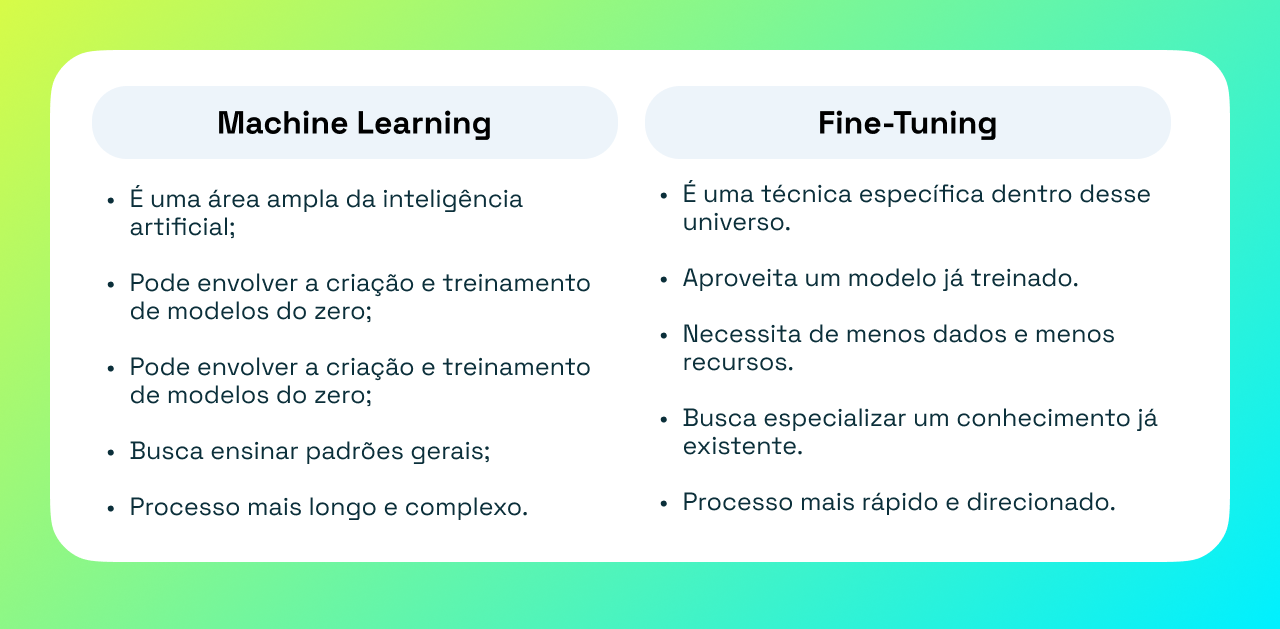
Embora os dois conceitos estejam relacionados, eles não significam a mesma coisa. O machine learning, ou aprendizado de máquina, é uma área da inteligência artificial que permite que sistemas aprendam padrões a partir de dados para realizar previsões, classificações ou tomadas de decisão.
O fine-tuning é uma técnica que faz parte desse universo. Em vez de criar um modelo do zero, ele aproveita um modelo já treinado e realiza ajustes para que ele execute determinadas tarefas com mais precisão ou siga comportamentos específicos.
No machine learning tradicional, os desenvolvedores alimentam algoritmos com grandes volumes de dados para que eles aprendam padrões e desenvolvam sua capacidade de resposta ao longo do tempo.
Alguns exemplos comuns incluem:
Esse treinamento costuma exigir grandes quantidades de dados, infraestrutura computacional robusta e um processo de desenvolvimento mais complexo.
O fine-tuning acontece em uma etapa posterior ao machine-learning. O modelo já possui conhecimento geral adquirido durante seu treinamento inicial. A partir daí, uma empresa ou organização fornece informações adicionais para especializá-lo em um determinado contexto.
Por exemplo, uma empresa pode realizar fine-tuning em um modelo de IA utilizando:
Assim, a IA passa a gerar respostas mais alinhadas à realidade daquele negócio sem precisar ser treinada do zero.
O fine-tuning pode ser muito positivo quando usado com estratégia. Afinal, ele reduz o tempo gasto em tarefas repetitivas e melhora a qualidade das respostas em contextos específicos. Para uma equipe de marketing, isso significa produzir conteúdos mais alinhados, criar campanhas com mais agilidade e manter uma comunicação mais padronizada entre diferentes canais.
Uma marca que possui tom de voz bem definido pode usar o fine-tuning para manter esse padrão em blogs, redes sociais, e-mails e atendimento.
Dessa forma, a IA entende melhor quais termos usar, quais evitar e como estruturar as mensagens. Isso ajuda a reduzir revisões e melhora a percepção de profissionalismo.
Outro ponto positivo é a personalização. Com dados bem organizados, a IA pode gerar respostas mais próximas das necessidades de cada público.
Por exemplo, uma loja virtual pode adaptar recomendações, descrições e mensagens de pós-venda com base no comportamento dos clientes. Assim, o marketing se torna mais relevante e menos genérico.
No marketing digital, o fine-tuning pode mudar a forma como empresas criam conteúdo e se relacionam com o público. Entre os principais impactos, estão:

Além disso, equipes menores conseguem competir com empresas maiores, já que a IA ajuda a automatizar parte do trabalho criativo e operacional. No entanto, isso não elimina a importância da estratégia humana. A IA pode acelerar processos, mas ainda precisa de direção, revisão e critérios claros.
Apesar dos benefícios, o fine-tuning também gera preocupações. Uma das principais envolve o uso de conteúdos produzidos por autores, jornalistas, blogueiros e especialistas sem o devido crédito. Muitos modelos de IA aprendem com textos disponíveis na internet.
O problema começa quando esses conteúdos ajudam a treinar sistemas que depois entregam respostas completas ao usuário, sem direcioná-lo para a fonte original. Com isso, o autor pode perder duas coisas importantes: reconhecimento e tráfego.
Antes, quando alguém pesquisava uma dúvida no Google, era comum acessar um blog, ler o conteúdo e conhecer a empresa ou o autor por trás daquele material. Agora, com respostas geradas por IA diretamente nos buscadores ou em assistentes virtuais, o usuário pode receber a informação sem visitar o site original.
Isso afeta diretamente:
Portanto, mesmo que o conteúdo continue sendo usado como base de conhecimento, o clique pode deixar de acontecer. Para quem investe tempo e dinheiro em produção de conteúdo, essa mudança representa um desafio.
O SEO tende a ficar mais competitivo. Se os usuários recebem respostas prontas da IA, os sites precisam oferecer algo além da informação básica. Isso significa que conteúdos genéricos, superficiais ou repetitivos podem perder relevância mais rápido. Por outro lado, materiais autorais, completos e bem posicionados ainda têm espaço.
A tendência é que marcas invistam mais em:
Textos com opinião, análise própria, exemplos reais e experiência prática ganham mais valor. Afinal, a IA consegue resumir informações, mas ainda depende de fontes confiáveis para construir boas respostas.
Quando o usuário reconhece uma marca como referência, ele tende a procurá-la diretamente. Por isso, branding e SEO devem caminhar juntos.
Pesquisas próprias, estudos de caso, relatórios e levantamentos internos podem diferenciar uma empresa em meio a conteúdos cada vez mais parecidos.
O avanço das respostas geradas por IA, como AI Overviews do Google e outros sistemas generativos, trouxe uma nova preocupação para autores de artigos, blogs e portais. Afinal, muitos desses conteúdos podem ser usados como base para respostas prontas, mas sem gerar o mesmo volume de cliques para as páginas originais.
Esse cenário cria um conflito importante. Por um lado, o usuário recebe respostas rápidas e práticas. Por outro, quem produziu o conteúdo que ajudou a formar aquela resposta pode perder visibilidade, tráfego e reconhecimento.
Dados de uma análise da AhRefs, com 300 mil palavras-chave, mostram que o CTR médio da posição 1 caiu de uma previsão de 3,7% para um resultado real de 1,6% em dezembro de 2025. Isso representa uma queda de 58% no volume de cliques.
Além disso, o estudo aponta que consultas com AI Overviews tiveram queda no CTR orgânico de 1,76% para 0,61%. No tráfego pago, a redução também foi expressiva, com queda de 19,7% para 6,34%.
A IA pode organizar informações, resumir conteúdos e facilitar a busca do usuário. No entanto, quando ela entrega respostas completas sem valorizar a fonte original, o mercado de conteúdo perde equilíbrio.
Blogs, jornalistas, especialistas e empresas investem tempo, pesquisa e estratégia para produzir materiais úteis. Se esses conteúdos alimentam sistemas de IA, mas deixam de receber crédito, tráfego ou algum tipo de retorno, a produção autoral pode se tornar menos sustentável.
Outro dado relevante mostra que marcas citadas em AI Overviews receberam 35% mais cliques orgânicos e 91% mais cliques pagos do que aquelas que não foram citadas.
Isso reforça um ponto importante: não basta produzir conteúdo, também será necessário conquistar autoridade suficiente para ser referenciado pelas respostas de IA. Dessa forma, o SEO passa a depender cada vez mais de credibilidade, reputação e presença de marca.
Quando o uso da IA ignora os criadores originais, o impacto vai além da queda de tráfego. O mercado pode enfrentar uma redução na produção de conteúdos aprofundados, já que muitos autores dependem de acessos, anúncios, leads e conversões para manter seus canais ativos.
Portanto, o debate sobre fine-tuning, AI Overviews e outras inteligências artificiais precisa considerar uma pergunta central: como a tecnologia pode evoluir sem desvalorizar quem produz o conhecimento que ela utiliza?
Para o marketing, essa discussão é decisiva. Marcas que investem em conteúdo precisam acompanhar as mudanças nas buscas, fortalecer sua autoridade e defender práticas mais transparentes no uso da inteligência artificial.
Recentemente, o Reino Unido levantou discussões sobre a necessidade de regular o uso da inteligência artificial por grandes plataformas, incluindo o Google. O debate envolve pontos como transparência, uso de conteúdos de terceiros e impacto nas marcas que dependem de SEO.
Esse movimento mostra que governos e entidades reguladoras já observam como a IA pode mudar a relação entre buscadores, produtores de conteúdo e usuários. Para entender melhor esse cenário, leia o artigo printado: “Regularização da IA no Reino Unido pode afetar marcas internacionais?”.
O fine-tuning pode ser uma ferramenta poderosa, mas precisa de limites. Empresas que usam IA no marketing devem se preocupar com ética, transparência e qualidade das informações. Boas práticas incluem:
Assim, a tecnologia deixa de ser apenas uma forma de produzir mais rápido e passa a ser uma aliada para criar conteúdo melhor.
O fine-tuning das IAs representa uma grande oportunidade para o marketing. Ele ajuda empresas a personalizar campanhas, melhorar atendimentos, acelerar processos e manter uma comunicação mais consistente. Ao mesmo tempo, essa evolução exige cuidado.
Quando conteúdos de autores e blogs alimentam sistemas de IA sem crédito ou retorno de tráfego, o mercado precisa discutir novas formas de reconhecimento, compensação e transparência. No fim, o impacto do fine-tuning depende de como ele será usado. Com estratégia e responsabilidade, ele pode fortalecer marcas. Sem critérios, pode ampliar problemas já existentes no ambiente digital.
Continue explorando conteúdos relacionados que podem ser do seu interesse