Tutorials Intellux

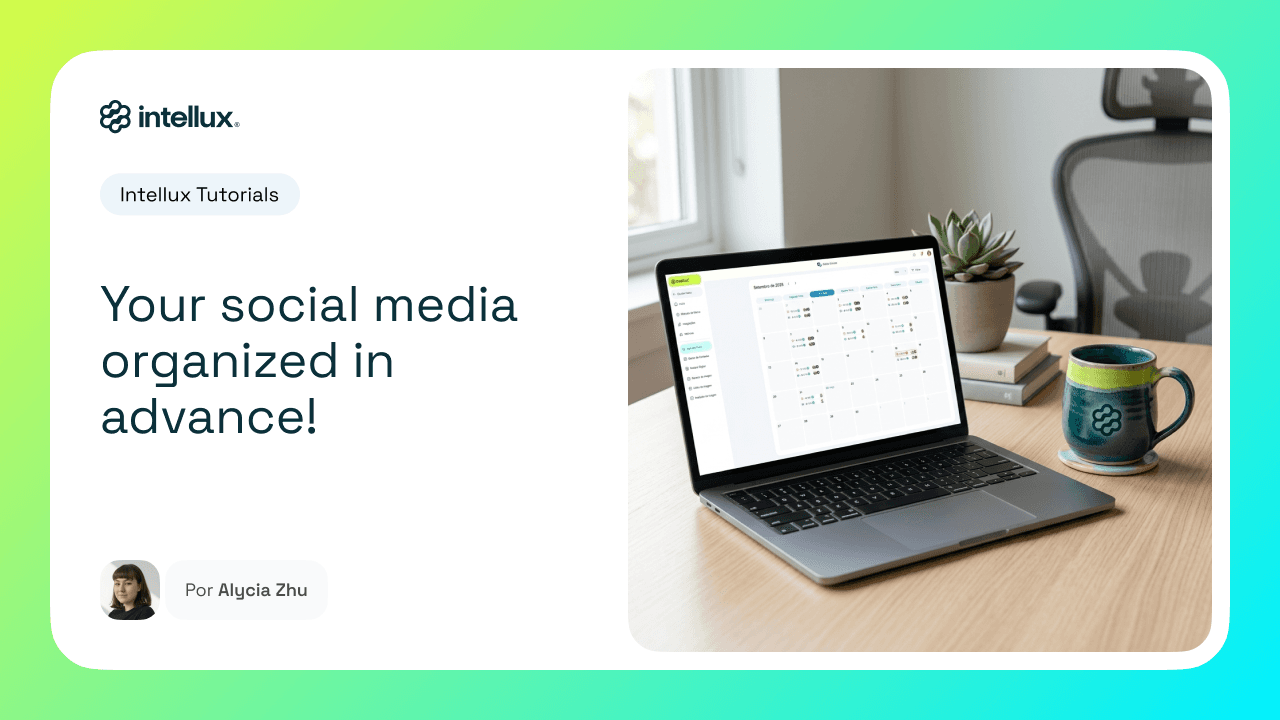
Maintaining a consistent presence on social media requires planning. After all, besides creating content, you also need to review materials, prepare captions, organize images, and make sure each post goes live at the planned time.
In this context, post scheduling helps companies and professionals turn a manual routine into a more organized process. Instead of interrupting other activities every day to publish content, you can prepare posts in advance and define when each one will go live.
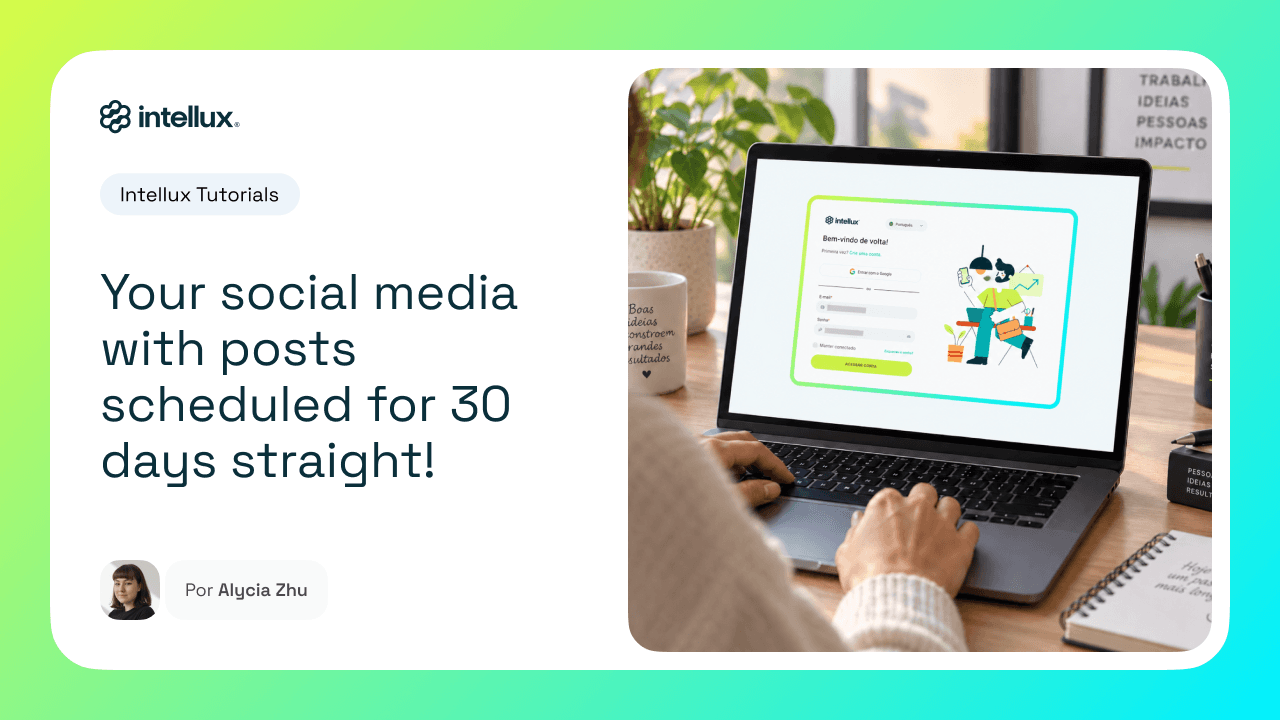
In addition, tools like Intellux make it possible to centralize this process and schedule content for Instagram, Facebook, and LinkedIn. This way, teams and independent professionals can spend less time on operational social media tasks and more time on business strategy.
Post scheduling is the process of preparing a publication in advance and setting a date and time for it to be automatically published on a social network.
In practice, this means you do not need to access each platform exactly when you want to publish. Once the content is ready, you simply schedule the post for the period defined in your plan.
Instagram itself, for example, provides scheduling features for professional accounts, while LinkedIn also allows users to define a date and time for certain publications. You can check the official guidelines on scheduling posts on Instagram and scheduling posts on LinkedIn.
For example, a company can prepare all of the following week's posts on Friday. As a result, the content can go live automatically on Monday, Wednesday, and Friday without requiring a new action from the team on each date.
Consequently, social media management becomes more predictable and organized.
The main purpose of scheduling is to reduce repetitive tasks related to content publishing. When a company publishes manually, someone needs to remember the date, access the social network, find the correct material, insert the caption, and publish the post.
Although each step may seem simple, this process can take up a considerable amount of time throughout the month.
With scheduling, much of this work can be concentrated into a single moment. This makes it possible to organize:
publication dates;
times;
texts and captions;
images and other materials;
social networks where the content will be published;
campaigns and specific periods in the editorial calendar.
In addition, this organization reduces the risk of forgetting important posts or having to interrupt other tasks just to publish content.
To schedule publications, you can use a tool that integrates with the social networks your brand uses.
Intellux, for example, has a post scheduler that allows you to schedule content for Instagram, Facebook, and LinkedIn directly within the platform.
This way, the publishing process can become part of the overall content planning. Intellux also makes it possible to connect different stages of the process, from planning to publishing. In this guide, you can learn how to use Intellux to create creative posts for your brand.
Before you start scheduling, define which content should go live during a specific period.
An editorial calendar can help a lot in this process. It allows you to organize topics, goals, formats, dates, and social networks.
In addition, working with a plan makes it easier to visualize how content will be distributed throughout the month. Artificial intelligence can also support this stage by suggesting topics, structuring content pillars, and accelerating activities that previously required more manual work. Intellux explains this process in its content on how to use AI to manage social media and create content faster.
Once the planning is defined, prepare the materials that will be used in the publications.
This includes, for example:
writing captions;
creating images;
reviewing texts;
defining formats;
choosing social networks;
approving content.
At Intellux, other tools can also support this stage, such as the Digital Writer, Image Editor, and Image Generator.
This way, the process can go from content creation to scheduling within the same work environment. For the visual part, you can also check the guide on how the Intellux image editor works.
Once the content is ready, select where the publication should appear. The Intellux scheduler allows you to organize content for:
Instagram;
Facebook;
LinkedIn.
This is especially useful for brands that maintain a presence across different channels. In addition, the same campaign can be organized while taking the particularities of each social network into account.
Next, choose when the content should be published. The date should follow the editorial calendar and the goals of the strategy. For example, content related to campaigns, launches, holidays, or events should be scheduled according to those moments. Once the scheduling is configured, the publication is ready to go live during the defined period.
Instead of scheduling only the next post, you can use the planning period to organize several publications at once. This makes it easier to clearly visualize what will be published in the coming days or weeks. Consequently, the team reduces the need to perform operational tasks every day.
Post scheduling is not only useful for automating a publication. When used within an organized process, it can also improve the marketing routine.
One of the main benefits is being able to see in advance what will be published. Instead of deciding every day which content should go live, the company can prepare a sequence of publications. This makes it easier to distribute topics, campaigns, commercial content, and educational materials throughout the month.
Publishing manually several times a week requires constant attention. By leaving posts scheduled, the team reduces these small interruptions in the routine.
Consequently, the time spent accessing different networks, searching for files, and publishing materials can be redirected to other activities. Centralizing different stages can also help reduce rework. This is one of the points discussed in the content on social media tools that help centralize the workflow.
Not every company has a large marketing team. In small businesses, the same person may be responsible for social media, customer service, sales, planning, and other activities.
For this reason, leaving publications scheduled in advance reduces dependence on daily tasks. While the scheduled content follows the calendar, the team can focus its efforts on activities that require closer attention.
The same applies to professionals who manage their own social media. An independent professional does not need to interrupt a meeting, appointment, or another activity just because it is time to publish content.
With scheduling, they can reserve a specific period to organize publications and prepare part of their communication in advance. As a result, social media no longer requires constant operational attention.
Automating repetitive tasks also creates room for more strategic activities. Instead of dedicating a large part of the routine only to publishing, professionals can analyze which content performs better, study their audience, monitor metrics, and plan new campaigns. Therefore, the goal of scheduling is not simply to publish automatically. It also helps create a more efficient marketing routine.
Always working on the next publication can make social media management more reactive. When content is ready and scheduled in advance, the company can work with a broader view of the calendar. For example, a team can organize educational, institutional, and commercial content in advance while still keeping room for timely topics when necessary.
This advance planning also provides more time to review materials, correct information, and adjust communication before publication. In addition, planning reduces the pressure of having to create and publish something every day.
Maintaining a publication frequency can be difficult when the entire process depends on manual actions. Meetings, unexpected requests, appointments, and other priorities can cause a publication to be postponed or forgotten.
On the other hand, when the content is already scheduled, the calendar does not depend on someone being available at that exact time. As a result, scheduling helps maintain a more organized publishing routine.
This does not mean that all social media activities should run completely automatically. Interactions, comments, messages, and opportunities still require human attention. However, automating the operational publishing stage frees up more time for exactly these activities.
Intellux allows you to bring different stages of content management together within the platform. After creating and organizing the materials, you can use the scheduler to program publications on Instagram, Facebook, and LinkedIn.
This way, the workflow can happen in an integrated manner:
plan the content;
produce the materials;
review the publications;
choose the social networks;
define dates and times;
leave the posts scheduled.
In addition, other Intellux features can also be part of this process. The Content Manager helps organize the editorial calendar, while the Digital Writer, Image Editor, and Image Generator support content production.
Consequently, the team can reduce the number of separate tools and steps involved in social media management.
Managing social media does not have to mean accessing different platforms every day just to publish content. With planning and a scheduling tool, companies and professionals can prepare posts in advance, organize the calendar, and automate part of the operational routine.
In addition to helping keep social media organized, this strategy provides more freedom for those who also need to take care of other areas of the business. While scheduled publications follow the plan, teams can dedicate more attention to strategy, results, customers, and the brand's next actions.
With the Intellux post scheduler, you can schedule content for Instagram, Facebook, and LinkedIn and turn social media management into a more organized, predictable, and integrated process.
Continue exploring related content that might interest you