
Market Movements


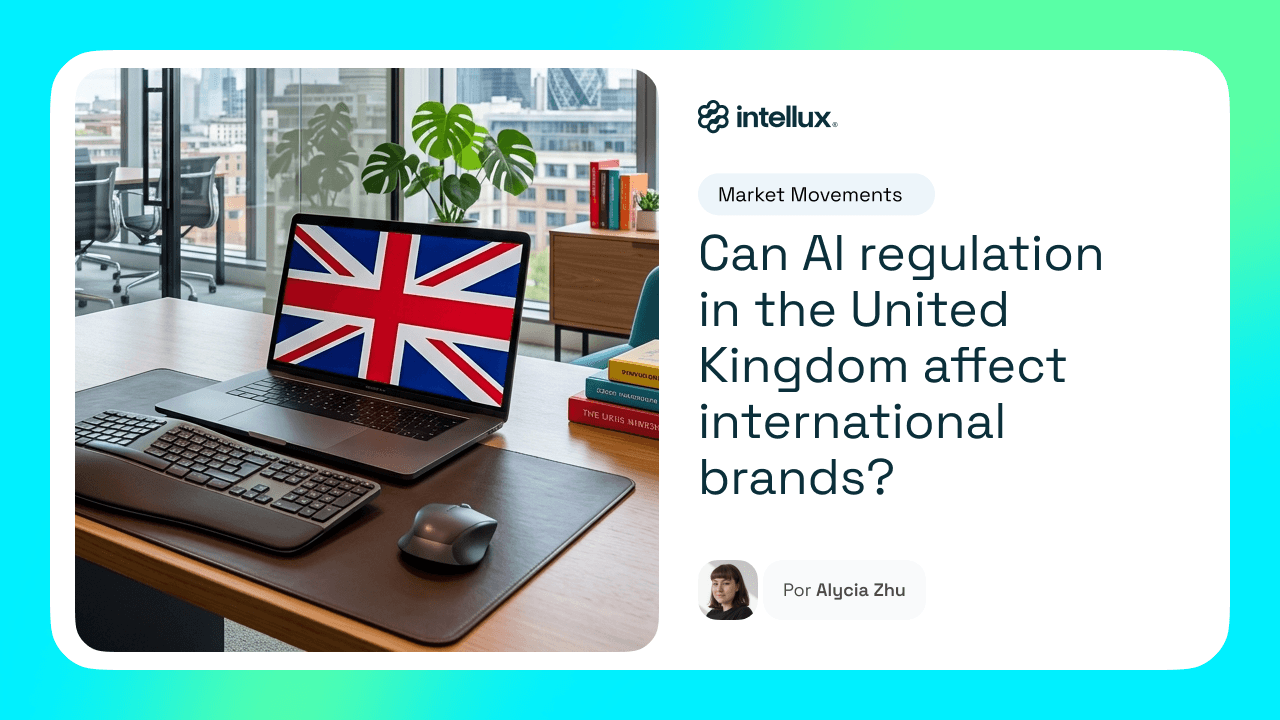
The advance of artificial intelligence in search has been raising an important discussion among technology companies, publishers, SEO professionals, and regulatory bodies. At the center of this debate, the United Kingdom has gained attention by demanding more control and transparency over the use of content in Google’s AI features.
But does this mean the United Kingdom is against AI? Not exactly. The country’s movement is less about preventing the use of technology and more about creating rules so that search engines, publishers, and users can coexist in a more balanced environment.
For SEO, this discussion matters because it shows how organic search is no longer just a competition for positions on results pages. Now, it also involves presence in AI-generated answers, content usage rights, source attribution, editorial control, and the impact on website traffic.
The United Kingdom’s competition authority, the Competition and Markets Authority, known as the CMA, determined that Google must offer publishers more control over how their content appears in artificial intelligence features within search.
In practice, this includes the possibility of preventing content from being used in experiences such as AI Overviews and AI Mode, without the website losing its presence in traditional organic results.
This point is very important. Until then, one of the major concerns for publishers and content outlets was the lack of real choice. If a website wanted to avoid having its content used in AI-generated answers, it could also end up harming its visibility in regular search.
With the new requirement, the United Kingdom is trying to separate these two things. A website can continue appearing in Google’s traditional results while choosing not to participate in certain generative AI features.
The most accurate answer is: no. The United Kingdom is not positioning itself against AI, but against the lack of control, transparency, and competitive balance in the use of AI within search.
The concern of regulators is not to prevent Google from using artificial intelligence to improve the search experience. The issue is how this technology can affect the content ecosystem, publisher revenue, and the traffic of websites that depend on organic search to survive.
When an AI-generated answer appears at the top of Google, it can solve the user’s question without requiring them to click on the websites that originated the information. For the user, this may seem faster. For the publisher, it can mean fewer visits, less advertising revenue, fewer subscriptions, and a lower return on content investment.
That is why the discussion in the United Kingdom is not simply technological. It involves competition, content rights, transparency, the sustainability of journalism, and the future of organic search. The goal of this regulation is to give brand owners more autonomy, preventing their blogs from being read by AI systems without any exchange in return.
SEO has always depended on a relatively clear exchange: websites produce content with specific keywords. Google, in turn, crawls and indexes these pages, users find answers through search, and part of that traffic returns to the websites.
With generative AI, this exchange begins to change, and Google can synthesize information from several pages and deliver a direct answer to the user. Even when there are supporting links, the click may not happen as often.
This changes the way companies, blogs, portals, and e-commerces need to think about their organic presence. It is no longer enough to ask only: “what position does my page appear in?” Now, it is also necessary to understand whether the content is being used as a source, whether it appears in AI answers, whether it receives visible attribution, and whether that exposure generates real traffic.
This is where the United Kingdom’s discussion indirectly connects with the new Search Console updates. As Google begins to offer more data and controls over the presence of websites in AI experiences, SEO professionals gain a clearer view of this new layer of visibility.
This topic is directly related to the debate about the new AI metrics in Search Console, which show how Google is transforming organic performance measurement in a more generative search landscape.
Internal link suggestion: also read the article about how Search Console will start showing AI metrics.
For websites operating in the United Kingdom, regulation can create a new strategic step within SEO. In addition to optimizing content for traditional rankings, companies will need to decide how they want to participate in Google’s AI experiences.
News outlets, specialized blogs, and large portals can evaluate whether it is worth allowing their content to appear in AI Overviews and AI Mode.
On one hand, participating in these experiences can increase brand visibility, generate authority, and keep the website present in new forms of search. On the other hand, there is a risk that the AI-generated answer may reduce the number of clicks to the original content.
This decision will not be the same for everyone. A portal that depends heavily on advertising revenue may have a different view from a B2B company that uses content to generate authority, leads, and brand recognition.
In the United Kingdom, SEO professionals will need to look beyond traditional click, CTR, and average position reports. Presence in AI interfaces can generate impressions and recognition, even when the click does not happen.
This creates a difference between visibility and traffic. A brand may appear in AI-generated answers, gain familiarity with the audience, but not receive an immediate visit. At the same time, if it chooses to leave these experiences, it may preserve its content, but lose space in an area that is becoming increasingly present in the search journey.
Another important point is the requirement for clearer links and attribution. For SEO, this can directly impact how content is recognized within AI answers.
If Google is required to show the sources used in generative answers more clearly, websites that produce reliable, original, and well-structured content may gain more prominence as references. This reinforces the importance of authority, editorial clarity, proprietary data, and thematic consistency.
British regulation does not affect only local companies. Any brand that wants to grow in the United Kingdom through SEO needs to understand that this market may have different rules, expectations, and behaviors regarding AI in search.
A Brazilian, American, or European company that wants to enter the United Kingdom should not simply copy the SEO strategy it uses in other countries. The British regulatory environment may require specific decisions about AI presence, content usage, structured data, brand authority, and transparency.
This applies to e-commerces, SaaS companies, fintechs, edtechs, health brands, tourism businesses, technology companies, and any business that depends on organic search to acquire customers in the country.
In the United Kingdom, an SEO strategy may need to consider not only keywords and search intent, but also how the content will be interpreted by AI mechanisms, which trust signals will be valued, and how the brand will be cited in generative answers.
Companies that want to rank in the United Kingdom need to produce content that makes sense for the British audience. This involves language, examples, legislation, currency, consumption habits, cultural references, and specific questions from that market.
With AI in search, this localization becomes even more relevant. Generative answers tend to value content that helps solve a question with clear context. Generic content, made only to “work for any country,” may have less strength in an environment where contextual relevance carries more weight.
In regulated markets, such as finance, healthcare, insurance, education, and betting, trust was already an important factor. With AI in search and regulatory pressure in the United Kingdom, this factor can become even more significant.
Companies that want to enter the country must clearly show who they are, what credentials they have, which standards they follow, and how they protect the user. This can involve more complete institutional pages, transparent policies, identified authors, reliable sources, and content reviewed by specialists when necessary.
For search engines and AI systems, these signals help determine whether a brand can be treated as a trustworthy reference.
The United Kingdom’s decision can serve as a signal for other markets. When a relevant country creates rules for AI search, other regions tend to observe the effects before defining their own paths.
This does not mean that every country will adopt exactly the same model. However, the trend is that discussions about opt-out, attribution, content rights, and transparency will become increasingly present.

For those who work with international SEO, this creates a new challenge. It is no longer enough to think of Google as the same experience in every country. Search may start to show stronger differences depending on the market, legislation, and pressure from local regulators.
An organic strategy for the United Kingdom may need to be different from a strategy for Brazil, the United States, the European Union, or Latin America. And this should influence everything from content production to performance analysis.
This is one of the most difficult questions. The answer depends on the business model, the type of content, and the relationship between visibility and conversion.
For a publisher that depends on pageviews and advertising revenue, leaving AI experiences may seem like a way to protect traffic. However, this can also reduce the brand’s presence in an area of search that tends to grow.
For a company that uses content to generate authority and leads, appearing in AI answers can be positive, even if it does not always generate an immediate click. The brand can gain exposure, trust, and recall at important moments in the user journey.
The main point is that this decision needs to be based on data. Before activating any type of block, it will be necessary to compare impressions, clicks, conversions, brand recognition, and the real impact on the funnel.
The United Kingdom’s movement shows that SEO, AI, and regulation are moving together. To prepare, companies that operate or intend to operate in the British market should pay attention to a few fronts.
Search Console tends to become an increasingly important tool for understanding the presence of websites in AI experiences. Reports, controls, and new metrics can help companies decide whether they should participate, limit, or rethink their exposure in these features.
Content with its own opinion, original data, specialized analysis, and real examples has a better chance of standing out in an environment dominated by synthesized answers. AI can summarize common information, but it still depends on strong sources to support reliable answers.
In the context of generative search, SEO is not just about optimizing titles, descriptions, and keywords. It is about building trust signals for people, search engines, and AI systems.
This involves brand authority, editorial consistency, presence in external sources, qualified mentions, updated content, and clarity about who is behind the information.
For companies from outside the country that want to enter the United Kingdom, local adaptation must be taken seriously. Translated content without context, generic pages, and poorly adjusted global strategies can lose strength.
The ideal approach is to produce content designed for the British audience, considering local questions, competitors in the country, legislation, search habits, and trust expectations.
The United Kingdom is not against artificial intelligence. What the country is doing is trying to organize the use of AI in search to protect publishers, increase transparency, and balance the relationship between large platforms, content producers, and users.
For SEO, this movement marks an important change. Organic visibility now depends not only on traditional rankings, but also on presence in generative answers, source attribution, control over the use of content, and adaptation to the rules of each market.
Companies that operate in the United Kingdom, or that intend to enter this market, need to follow this evolution closely. AI search can open up new visibility opportunities, but it also requires more strategic decisions about content, data, authority, and digital positioning.
In a scenario where SEO, AI, and regulation meet, those who understand the rules early tend to build a stronger, safer, and more future-ready organic presence.
Continue exploring related content that might interest you