Digital marketing


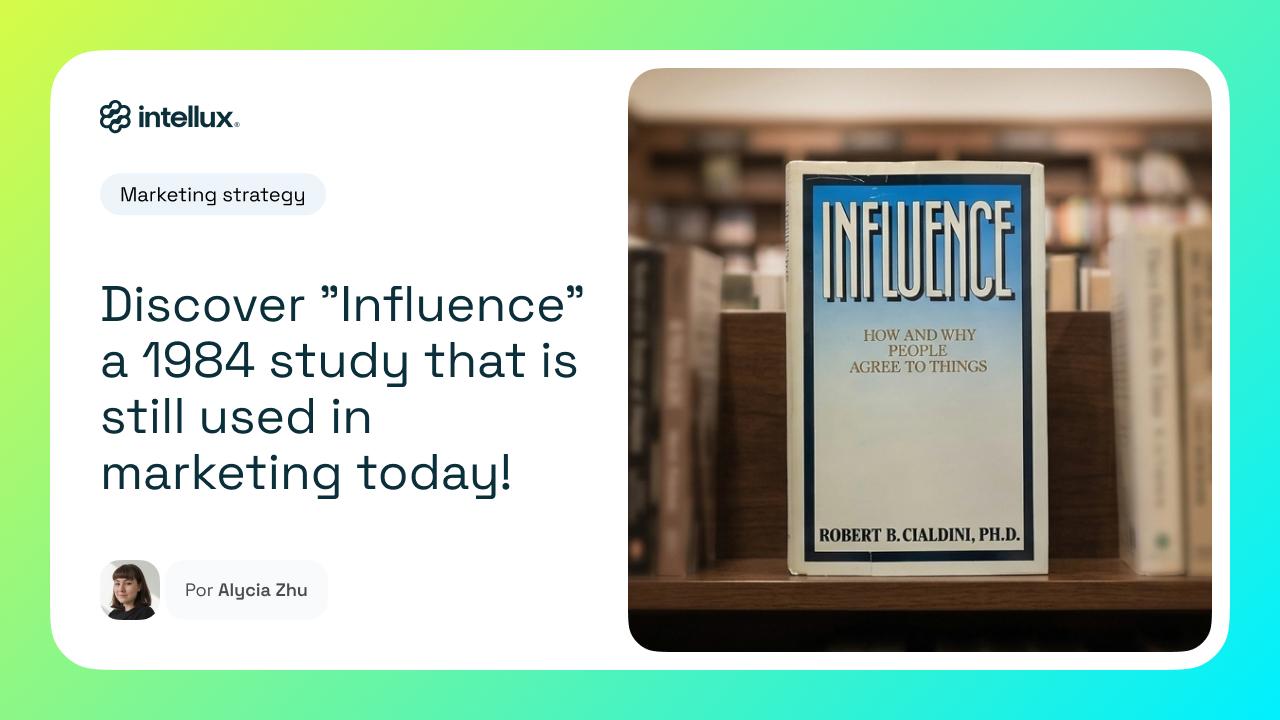
The answer does not lie only in the creativity of a campaign or in how many times an ad appears. There are psychological mechanisms that influence how we evaluate information, people, products, and brands.
Robert Cialdini, a psychologist and researcher of social influence, has dedicated much of his career to studying precisely these mechanisms. Early in his career, he realized that studying human behavior exclusively inside laboratories could leave an important part of the story out.
Instead of observing only controlled experiments, Cialdini decided to investigate persuasion where it happened every day: in the work of salespeople, recruiters, marketing professionals, fundraisers, and other people whose work depended on their ability to persuade others.
Decades later, these observations helped shape Cialdini's seven principles of influence. They also help us understand current phenomena, such as influencer marketing, content creation by company founders, and the increasing frequency of videos in which brands stop communicating exclusively through a corporate identity and start putting real people in front of the camera.
In an interview published by the Association for Psychological Science (APS), Cialdini explains that this line of research began when he was still a relatively young researcher. At the time, he realized that academic psychology was, to some extent, moving away from the real-world situations that gave rise to many behaviors.
The fact is that researchers were studying phenomena in controlled environments, developing theories, and then returning to discuss those theories within academia itself. As a result, Cialdini decided to take a different path and study persuasion in the field, out in the real world.
For approximately three years, he participated in training programs for professionals who worked directly with influence. He observed techniques used in areas such as automobile sales, insurance, commercial photography, marketing, supplements, recruiting, and fundraising. His interest was not simply in discovering "sales tricks." His goal was to identify consumer behaviors that appeared repeatedly in different contexts as a result of external influence.
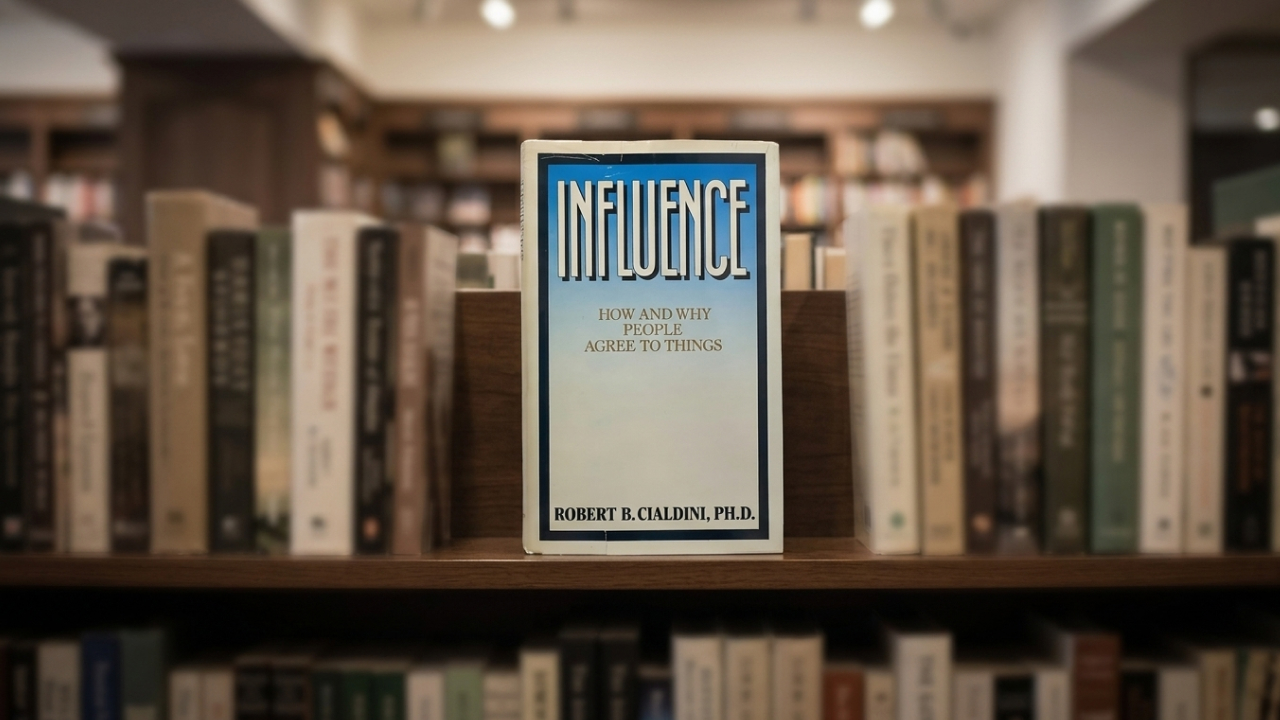
The principles should not be understood as a mandatory formula or a sequence of seven steps. They are different mechanisms that can influence how a person interprets a situation and makes a decision.
Reciprocity is based on a well-known tendency in social relationships: when we receive something from someone, we usually feel more inclined to give something back. This does not necessarily involve a physical gift. It can be an action, a conversation, or even attention.
To make this easier to understand, here are some practical examples:
| Company offers | Consumer may reciprocate with |
|---|---|
| Educational content that solves a real question | More attention to the brand and a greater likelihood of following future content |
| Consultative support, even before a purchase | Trust and preference for the company when a purchase need arises |
| An open space for feedback and suggestions | More active participation and information that helps improve products and services |
| Fast support to solve a problem | Greater loyalty and willingness to continue buying from the brand |
| Free tools, such as calculators, tests, or assessments | Registration, return visits to the website, or consideration of the company in a future decision |
| A personalized response to a question on social media | More interaction, comments, and the possibility of spontaneous recommendations |
| Free access to specialized knowledge | Perception of authority and greater openness to learning about a paid solution later |
| A community, group, or space for customers to exchange ideas | Recurring participation, user-generated content, and a stronger brand community |
The principle helps explain, for example, why educational content is part of so many marketing strategies. A brand that provides genuinely useful information before a sale establishes a different relationship from one that appears only to present an offer.
Cialdini summarizes the mechanism by explaining that people tend to reciprocate with those who have first given something to them.
We are also more receptive to people we like, and this tendency continues when we consume products and services. Cialdini highlights two characteristics in particular that professionals use to increase this sense of closeness:
When someone recognizes characteristics, experiences, difficulties, or opinions similar to their own in another person, there is more room for identification. In marketing, this helps explain why overly institutional communication can struggle to create a sense of closeness.
A company does not need to abandon its professional identity. However, showing the people who work there, sharing experiences, and talking about problems the audience also faces adds human elements that rarely appear in communication built exclusively around products.
When we are unsure about a particular decision, we often observe other people's behavior. This is social proof.
One of the experiments Cialdini mentions in the APS interview shows how this mechanism can change even relatively simple behaviors. Researchers compared messages used by hotels to encourage guests to reuse their towels. One highlighted the environmental benefits. Another informed guests that other hotel guests were also reusing their towels.

Communication based on other people's behavior produced better results. Researchers also found that making the reference more contextual, by mentioning guests who had stayed in that same room, could further increase the effect.
→ The message stopped communicating only "do this because it is the right thing to do" and added a piece of social information: "people who were in the same situation did this."
When there is uncertainty, we also look to people who appear to know more about a particular subject, and this is where the principle of authority comes from. Education, experience, specialization, and knowledge can act as signals that help someone determine how much weight they should give to a piece of information.
In marketing, authority does not simply mean claiming that a company is an expert. It needs to demonstrate that expertise to its audience. A professional explaining a technical problem, a founder sharing lessons learned over years of experience, or a company presenting research and concrete experiences are ways to turn knowledge into visible evidence of expertise.
The relationship between authority and content is particularly important in the B2B market.
A study by Edelman and LinkedIn involving 3,484 executives found that 52% of decision-makers and 54% of C-level executives spent one hour or more per week consuming thought leadership. In addition, 75% said this type of content had led them to research a product or service they had not previously been considering.
We also tend to place greater importance on something when we perceive its availability as limited. Cialdini summarizes the principle simply: we want more of what we can have less of.
This is where messages related to limited quantities, availability, exclusive access, or specific time periods come from. However, there is an important difference between communicating a real limitation and artificially creating scarcity.
If there are five units available, stating that only five units remain provides relevant information for the decision. If there are hundreds of units and the brand invents this limitation, we are talking about a deceptive strategy.
This distinction matters because Cialdini also advocates for the ethical use of the principles of influence: presenting real factors that are relevant to a decision instead of artificially manufacturing those factors.
People also tend to maintain behaviors that are consistent with what they have previously said or done. This is the principle of commitment and consistency, which means that a small decision can influence subsequent decisions.
Subscribing to a newsletter, following a series of content, trying a tool, or expressing interest in a particular topic represent different levels of involvement.
This does not mean that someone who takes a small action will necessarily make a purchase. However, previous decisions become part of the context in which future decisions are evaluated.
The seventh principle was added later by Cialdini and relates to the perception of belonging.
The question is no longer simply:
and becomes closer to:
Family, profession, community, culture, shared experiences, and social groups can contribute to this sense of common identity. This principle helps explain some of the strength of digital communities.
A creator who specializes in ceramics does not necessarily bring together only people interested in buying tools. They may bring together people who identify as ceramicists, artists, or beginners learning a new activity. The relationship begins to revolve around a shared identity rather than only a commercial transaction.
Practically all of these mechanisms can appear in influencer marketing. Influencers do not simply function as advertising spaces with followers.
Over time, audiences follow their opinions, experiences, mistakes, habits, recommendations, and personal stories. This exposure can create familiarity and what the literature calls a parasocial relationship: a sense of closeness built between an audience and a media figure, even when there is no reciprocal personal relationship.
A meta-analysis published in the International Journal of Information Management brought together 117 studies involving 47,647 participants and found relationships between parasocial engagement, brand associations, and purchase intention. The study also identifies characteristics such as expertise, trustworthiness, and congruence between the influencer and the audience as relevant elements in this process.
Another study, involving 433 participants, found that parasocial relationships with influencers had a particularly important association with behavioral intentions and showed that influencers' disclosure of personal aspects can contribute to this relationship.
A study published in 2026 once again found relationships between credibility, parasocial relationships, trust, and purchase intention. In this study involving 304 social media users in Morocco, influencer credibility was associated with both trust and the development of parasocial relationships. However, the authors emphasize that the study's cross-sectional design allows us to discuss associations, not establish direct causality.
Therefore, part of the power of influencer marketing can be understood through a combination of the principles presented by Cialdini.
This logic does not need to remain restricted to traditional influencers. This is precisely where Founder-Led Marketing, or FLM, comes in: a strategy in which the founder moves beyond staying exclusively behind the scenes and also becomes one of the company's public voices.
Instead of all communication coming exclusively from the institutional profile, the founder shares knowledge, opinions, behind-the-scenes content, lessons learned, decisions, and experiences related to the market in which the company operates. This does not automatically turn every founder into an influencer. However, it creates conditions similar to those found in influencer marketing.
The Edelman and LinkedIn study helps explain why this strategy has gained relevance, particularly in B2B. In its thought leadership research, nine out of ten decision-makers and C-level executives said they were moderately or significantly more receptive to sales outreach from companies that consistently produce high-quality content.
In addition, a Sprout Social study found that 70% of consumers said they felt more connected to brands when their CEOs maintained an active presence on social media. Among these consumers, 65% said regular social media use by a CEO made it feel like real people were behind the company.
The strength of this strategy, therefore, does not simply come from putting the company owner in front of a camera. It comes from transforming knowledge and experience into recurring human communication.
For a long time, brands were able to communicate almost exclusively through graphic materials, produced commercials, and institutional profiles. Social media has changed part of this logic. Today, a company competes for attention in the same environment where friends, experts, creators, customers, and other people appear.
In this context, short-form video has become particularly relevant. Data compiled by HubSpot identified short-form video as the content format with the highest reported ROI among marketers in its 2025 survey. However, the format itself is not the only thing that deserves attention. A person in front of the camera makes it possible to incorporate several social signals simultaneously.
This is where frequency begins to matter.
There is no universal number of videos capable of generating trust. Publishing three, five, or seven times per week does not guarantee that a relationship will be created. The most important element is recurring exposure accompanied by consistency and value. This also helps explain why constantly changing the spokesperson can make a people-centered strategy more difficult.
When the same founder, specialist, or professional appears repeatedly, the audience accumulates references about that person. Gradually, viewers stop encountering a stranger every time they open a video.
This recurrence creates the conditions for familiarity, while the content delivered throughout these interactions can build authority, liking, and a sense of unity. Recent research on parasocial relationships reinforces precisely the importance of repeated interactions and familiarity in this process. Continuous exposure to content from the same person can contribute to feelings of closeness and connection, particularly when credibility and identification are present.
For this reason, frequency should be understood less as a mathematical formula and more as continuity of presence.
Perhaps the most interesting connection between Cialdini's studies and modern marketing can be found here. Brands have spent decades trying to build recognition through logos, colors, jingles, characters, and visual styles. These elements remain important. However, a recurring person can also become a powerful element of recognition.
When a founder appears every week explaining the market, when a specialist consistently answers questions, or when certain employees begin teaching something through the company's channels, the audience starts associating that person with the brand. This makes it possible to work with several principles simultaneously:
The goal does not need to be turning every CEO into a celebrity or forcing employees to become creators. The principle is simpler: companies are made up of people and, in certain contexts, allowing those people to be visible can reveal characteristics that a logo alone would struggle to communicate.
There is still an essential distinction: understanding the mechanisms of influence does not mean looking for ways to deceive someone. Cialdini's own work makes this distinction, as scarcity can either communicate a genuine limitation or manufacture false urgency. Authority can demonstrate a professional's experience or attempt to create credentials that do not exist. Social proof can present real customers or fabricate testimonials.
The psychological technique may appear similar, but the information presented to the consumer is completely different. When used responsibly, persuasion does not eliminate freedom of choice. It organizes relevant information in a way that makes it easier to understand. In marketing, perhaps this is precisely the main lesson left by decades of research on influence. People do not make decisions by analyzing each characteristic of a product or service in isolation.
They also observe who is speaking, who has already made that decision, how much they trust that source, how much they identify with them, and what previous experiences they have had with that brand. This is what Cialdini began to notice when he decided to leave the laboratory and observe salespeople, recruiters, and influence professionals working in the real world.
Decades later, the channels have changed. Today, there are Instagram, TikTok, YouTube, LinkedIn, influencers, and founders producing videos directly from their phones. The human mechanisms behind these interactions, however, remain an important part of how we build trust, reduce uncertainty, and make decisions.
Continue exploring related content that might interest you