Marketing strategy


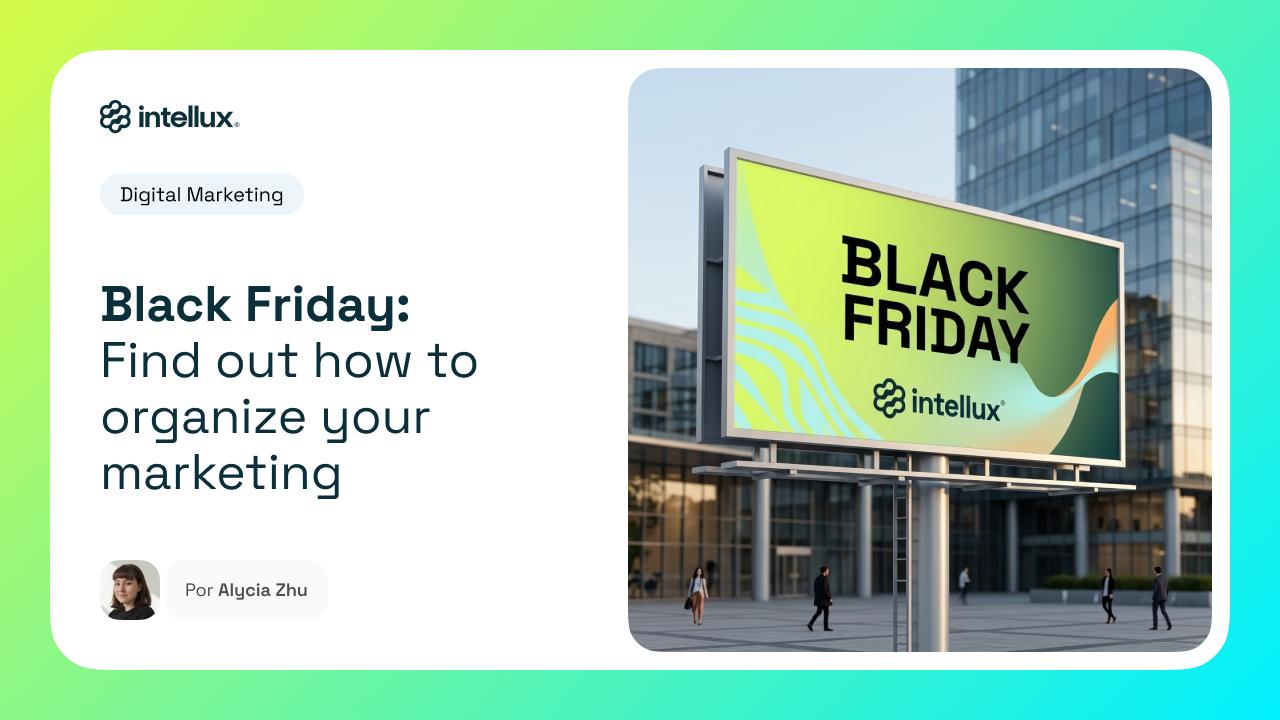
Black Friday 2026 officially takes place on November 27, but your marketing strategy should begin well before that date. After all, consumers start searching for deals, comparing brands, and planning purchases weeks in advance.
Therefore, preparing an effective campaign involves more than selecting products and offering discounts. Your business needs to understand how much it can afford to discount, who it wants to attract, how to communicate its offers, and, most importantly, what to do with the new customers acquired throughout November.
With proper planning, Black Friday can become more than a promotional event. It can evolve into a long-term customer acquisition and retention strategy.
Black Friday originated in the United States and traditionally takes place on the Friday following Thanksgiving, which is celebrated on the fourth Thursday of November. In 2026, Black Friday falls on November 27, according to the Time and Date calendar.
However, retailers no longer concentrate all their promotions into a single 24-hour period. In the United States, consumers have increasingly spread their purchases throughout the holiday shopping season, while retailers have started launching promotions earlier. The National Retail Federation (NRF) also recognizes that holiday-related deals begin appearing before November.
In Brazil, this flexibility is even more noticeable. Campaigns such as "Black Friday Warm-Up," "Black Week," and promotions lasting almost the entire month of November have become part of many retailers' promotional calendars.
This means your brand does not necessarily need to wait until November 27 to launch its campaign. However, starting early does not mean offering your biggest discounts throughout the entire month.
Your marketing plan should determine when each offer becomes available, which audience it targets, and what objective it should accomplish.
As November approaches, one of the first questions businesses ask is, "What discount should we offer?" However, a more important question should come first: "How much can we discount without hurting profitability?"
Before launching any promotion, your business needs to understand its profit margins and calculate the maximum sustainable discount for each product or service.
An aggressive discount may increase order volume while significantly reducing profitability. Additionally, advertising expenses, shipping costs, transaction fees, commissions, and operational costs must all be considered.
Therefore, marketing strategies should align with financial performance indicators. Offers need to be attractive enough to capture attention while remaining financially sustainable.
Not every product needs the same discount. Some offers can serve as entry points for new customers, while other products maintain higher margins or appear in bundles, upgrades, and complementary purchases.
Focusing exclusively on Black Friday profits can limit how businesses evaluate their campaign results.
November has an important characteristic: consumers are actively searching for promotions and showing stronger purchase intent.
According to a National Retail Federation survey published in October 2026, 64% of surveyed American consumers said they would likely wait until the Thanksgiving period to complete most of their holiday shopping.
Additionally, 56% identified discounts and promotions as one of the main factors influencing their choice of retailers. Although these figures represent the American market, they help illustrate the importance of promotional offers during the holiday shopping season.
This behavior creates an important opportunity for brands. Instead of asking only, "How much will we sell?", businesses should also consider:
How many new customers can we acquire?
How many people will discover our brand for the first time?
How many new contacts can we add to our database?
How many visitors can we convert into buyers?
How many of these customers might purchase again?
Naturally, the campaign must remain financially sustainable. However, the return on a Black Friday campaign can continue appearing weeks or months after the initial purchase.
That is why customer acquisition, retention, and repeat purchase metrics should be analyzed alongside revenue and profit margins.
A campaign targeting existing customers may perform differently from one focused on acquiring new buyers.
If your main objective for Black Friday 2026 is to expand your customer base, your communication strategy should reduce barriers for people who are unfamiliar with your business.
In this scenario, entry-level products, first-purchase incentives, trial bundles, demonstrations, free trials, or additional benefits may work better than simply applying large discounts across your entire catalog.
Furthermore, the content published before the campaign should introduce your brand to these potential customers.
You can use videos, carousels, advertisements, emails, and other formats to answer questions, present your competitive advantages, showcase products, and build trust before introducing your offers.
As a result, when Black Friday arrives, part of your audience will already be familiar with your business. To complement this strategy, read our article on how to reduce your dependence on paid traffic in marketing, which explores different channels for expanding brand visibility.
Launching your campaign early can give your business more time to attract attention. However, repeating the same offers for four consecutive weeks may reduce their perceived novelty.
A better approach is to divide the campaign into different stages.
At the beginning of November, for example, your business can publish educational content and highlight the problems your products solve. Next, you can reveal participating products, open an early-access list, or offer exclusive conditions to selected customer segments.
During Black Friday week, communication can become more commercially focused. At this stage, advertisements, social media posts, and email marketing campaigns can reinforce offers, product benefits, and promotional deadlines.
Finally, Black Friday itself can feature your main offer or a special condition that marks the campaign's conclusion.
This progression helps build anticipation without turning the entire month of November into a series of repetitive promotional messages.
To ensure each campaign stage happens at the right time, your business needs a structured editorial calendar. Beyond publication dates, the plan should include content formats, objectives, key messages, and distribution channels.
At Intellux, you can use our Content Manager to create content plans with artificial intelligence. You can then organize production workflows and prepare the posts that will support your campaign.
In our article on how to plan your month with the Intellux AI editorial calendar, we explain how to connect planning, content creation, and scheduling into a single workflow.
Not everyone following your brand is at the same stage of the purchasing journey.
Some customers have purchased several times. Others know your business but have never placed an order. There will also be consumers discovering your brand for the first time during Black Friday.
Sending exactly the same message to all these audiences means overlooking valuable information.
A returning customer might receive an offer based on their purchase history. Someone who abandoned their shopping cart might receive a specific reminder. Meanwhile, a new contact may need to understand your brand's benefits before receiving a message focused exclusively on pricing.
Segmentation allows businesses to transform a large promotional campaign into different customer journeys. Consequently, your company can develop offers, messages, and content formats that better match each audience.
Additionally, a well-structured email marketing strategy can help maintain these relationships. With appropriate consent, your business can organize contacts and develop communications for different stages of the purchasing journey.
The increased communication activity throughout November also creates greater demand for creative content.
A single design is unlikely to support an entire campaign. Furthermore, different messaging approaches may generate different results depending on the audience, format, or distribution channel.
Therefore, prepare multiple creative variations in advance.
You can test messaging focused on discounts, product benefits, trial opportunities, exclusivity, or approaching promotional deadlines.
It is also worth producing different versions for Reels, Stories, carousels, advertisements, and emails.
At Intellux, you can use AI to develop new content ideas and variations while following your brand guidelines. This allows your team to increase production without compromising visual and verbal consistency during a high-demand period.
If you want to explore this process further, read our article on how to create creative social media posts with Intellux.
In addition to producing different creatives, your team needs to ensure every post goes live at the planned time.
During Black Friday, sales demands, customer service, and campaign adjustments may occupy much of your team's schedule. Therefore, preparing and scheduling content in advance reduces the need for manual publishing.
With Intellux, your team can organize content for Instagram, Facebook, and LinkedIn. You can also maintain a clearer overview of all scheduled publications throughout the campaign.
In our guide to social media post scheduling, we explain how to organize content production and schedule posts ahead of time.
Not every decision needs to be finalized before November begins.
Monitoring performance throughout the campaign helps identify which products, messages, and formats are generating genuine interest.
Track indicators such as:
Reach and engagement;
Click-through rate (CTR) and website visits;
Conversion rate;
Customer acquisition cost (CAC);
Average order value;
Contribution margin;
Number of new customers;
Growth of your contact database.
However, avoid analyzing these metrics in isolation.
One post might reach thousands of people while generating very few sales. Another might reach a smaller audience but attract consumers with stronger purchase intent.
Similarly, a campaign may have a higher-than-usual customer acquisition cost and still make business sense when a structured strategy exists to generate additional purchases later.
However, this possibility must be supported by retention, repeat purchase, and margin data. Otherwise, businesses risk justifying short-term losses with future revenue that may never materialize.
We also explore this issue in our article on Temu's case study and the risks of depending on paid traffic, where we discuss the relationship between customer acquisition, retention, and sustainable marketing strategies.
This is where one of the biggest strategic opportunities appears.
Someone who purchases from your business for the first time during Black Friday does not need to disappear from your communication after November.
If your company acquires thousands of new buyers, it also gains a new audience for ongoing relationship building.
This is where share of customer, also known as share of wallet, becomes relevant. The concept focuses on increasing the proportion of a customer's purchases within a particular category that goes to your business over time.
Instead of finding a completely new buyer for every additional sale, your brand can understand the behavior of existing customers and create relevant opportunities for future purchases.
And there is another major shopping occasion just around the corner: Christmas.
Black Friday and Christmas do not need to operate as completely separate campaigns.
In fact, November can create opportunities for December.
After Black Friday, segment your newly acquired customers and analyze what they purchased. Based on this information, your business can recommend complementary products, introduce other categories, or develop offers related to the Christmas shopping season.
Someone who purchased a particular product during Black Friday might receive accessory recommendations. A customer who subscribed to an entry-level plan could learn about an upgraded option. Meanwhile, customers who purchased from specific categories might receive gift suggestions aligned with their interests.
The strategy moves beyond:
Black Friday → Sale
And becomes:
Black Friday → Acquisition → Relationship → New Offer → Repeat Purchase
This process can increase the value generated by every customer acquired throughout November.
However, for this strategy to succeed, the initial customer experience must be positive. On-time deliveries, responsive customer support, and transparent communication help build trust and create opportunities for lasting relationships.
A common mistake occurs when brands dramatically increase communication during Black Friday and practically disappear afterward.
Customer relationships need continuity.
Post-purchase content, tutorials, helpful tips, recommendations, product updates, and personalized messages help keep your brand present without turning every interaction into another promotion.
Furthermore, December remains an important period for retailers. According to the National Retail Federation's October 2026 forecast, American retail sales are expected to grow 4.2% during November and December, reaching approximately $1.013 trillion.
This forecast covers the U.S. holiday shopping season and reinforces the commercial importance of the period. Although it does not directly represent the Brazilian market, it demonstrates how November and December can work together within a broader sales strategy.
Therefore, ending all communication after the last Friday of November means abandoning a newly acquired audience just as another major shopping season begins.
An effective campaign begins before the first post goes live.
First, define the participating products and promotional conditions. Next, calculate your available margins and establish the maximum discounts your business can sustainably offer.
Then, identify the audiences you want to reach and prepare different communication stages focused on acquisition, conversion, and relationship building.
You should also organize your content calendar, produce multiple creative variations, and configure the email workflows that will support your campaign before, during, and after Black Friday.
Finally, establish the performance indicators that will determine whether your strategy was successful.
When these decisions are made in advance, your team can reduce last-minute improvisation throughout November and dedicate more time to analyzing and optimizing campaign results.
Black Friday 2026 represents a major sales opportunity, but limiting your campaign to a single day's revenue means taking advantage of only part of its potential.
Use November to attract people who do not yet know your business, acquire new customers, and expand your audience. Then, transform those new relationships into repeat purchase opportunities throughout Christmas and the following months.
With Intellux, your team can organize content production, create new AI-powered creative variations, plan publications, schedule posts, and structure email communications within a single platform.
This way, your campaign becomes more than a series of discounts. It becomes part of an ongoing marketing strategy focused on customer acquisition, engagement, and long-term relationships.
Continue exploring related content that might interest you